


The paper trail is in.
A declaration filed in federal court by a senior State Department official confirmed a couple of weeks ago what Afghan allies have known for months: the SIV system was deliberately paused, staffing was cut, and the people running it did not know how long any of it would last.
A congressional planning document shows a wind-down plan that can no longer deliver on its own assumptions.
The administration is quietly negotiating to send Afghan allies from Qatar to sub-Saharan Africa and Southeast Asia.
And since October, the United States has admitted three Afghan refugees.
Three.
Here’s what we know, what it means, and what you can do.
Action Items
Sign up for Battle Buddies and show up in court
This effort is about presence. Veterans and supporters standing alongside Afghan allies facing immigration proceedings, sending a clear message that they are not alone.
Share the Wall Street Journal story
This story captures what is at stake right now and helps bring broader attention to what Afghan families are facing.
ICE arrests the teenage son of an Afghan interpreter it already detained once
Zia, an Afghan interpreter who worked alongside American forces and whose case was one of the inspirations for our Battle Buddies program, was arrested at a routine green card appointment last summer and spent nearly three months in ICE custody before being released. This week, agents arrested his nearly 19-year-old son.
Rihan, a Connecticut high school student with a pending green card application, was arrested April 6. A judge blocked his transfer from an ICE facility in Connecticut. Agents moved him to Massachusetts anyway.
Visa processing and what we’re seeing
The challenges in visa processing are no longer limited to delays. They are structural.
According to a declaration submitted by Assistant Secretary Andrew Veprek in federal court, the Department of State paused both visa issuance and key stages of SIV processing following a November 2025 policy decision tied to security concerns. The Department has indicated that interview scheduling may increase this year. That statistic does not tell the full story.
Here is what is actually happening:
Applicants are not being told, at the time of scheduling, that attending their interview will result in a guaranteed denial under section 212(f) of the Immigration and Nationality Act due to current travel restrictions
There is no guidance for what happens after that denial, and no clear path forward while travel restrictions remain in place
The system is asking people to make complex, often dangerous journeys to interviews that cannot currently produce a viable outcome
Immigration attorneys are advising Afghan nationals and others from travel-banned countries not to schedule visa interviews at this time. AfghanEvac does not provide legal advice. If you or someone you know is navigating this situation, please consult a qualified immigration attorney.
Staffing reductions have compounded the problem. The Afghan SIV unit was cut substantially before recent rebuilding efforts began. Current hiring is not expansion. It is recovery from a degraded baseline. Even under optimistic projections, the Department estimates it may take years to work through the backlog.
This is not about process. It is about outcome. And right now, the system cannot deliver one.We put together a social media thread about this last Thursday.


What the Veprek declaration tells us
The declaration provides a rare, on-the-record look at how recent decisions were made and what they mean in practice.
A few things are clear:
The pause in visa issuance and COM processing was implemented quickly, before the Department had a clear understanding of how long it would last or how it would affect performance timelines
Key decisions were made without first seeking court approval, despite existing legal obligations
The system is now operating under constraints that make it difficult, if not impossible, to meet previously established benchmarks
This matters because it confirms what many have been experiencing: the system is not just delayed, it has been disrupted in ways that will take significant time to unwind.
A leaked plan to wind down the SIV program
On Thursday, we published a special update breaking down a previously undisclosed plan required by Congress to wind down the Afghan SIV program.
The plan makes something clear: it was designed to finish processing all eligible Afghan allies, not to cut the program short. It assumes continued operations under Enduring Welcome, sufficient staffing, and additional visas from Congress.
Those assumptions no longer hold.
In our special edition, we walk through what the plan says, what it depends on, and how recent decisions have put it at risk.
The gap between that plan and the current trajectory will determine whether thousands of Afghan allies are brought to safety, or left behind.
Listening Session with Representative Vindman
This week, we participated in a listening session with Representative Eugene Vindman, bringing together Afghan allies, veterans, and advocates to share what the current system looks like in practice. At his request, I moderated the conversation, helping ensure that the voices of those directly affected were heard clearly and directly
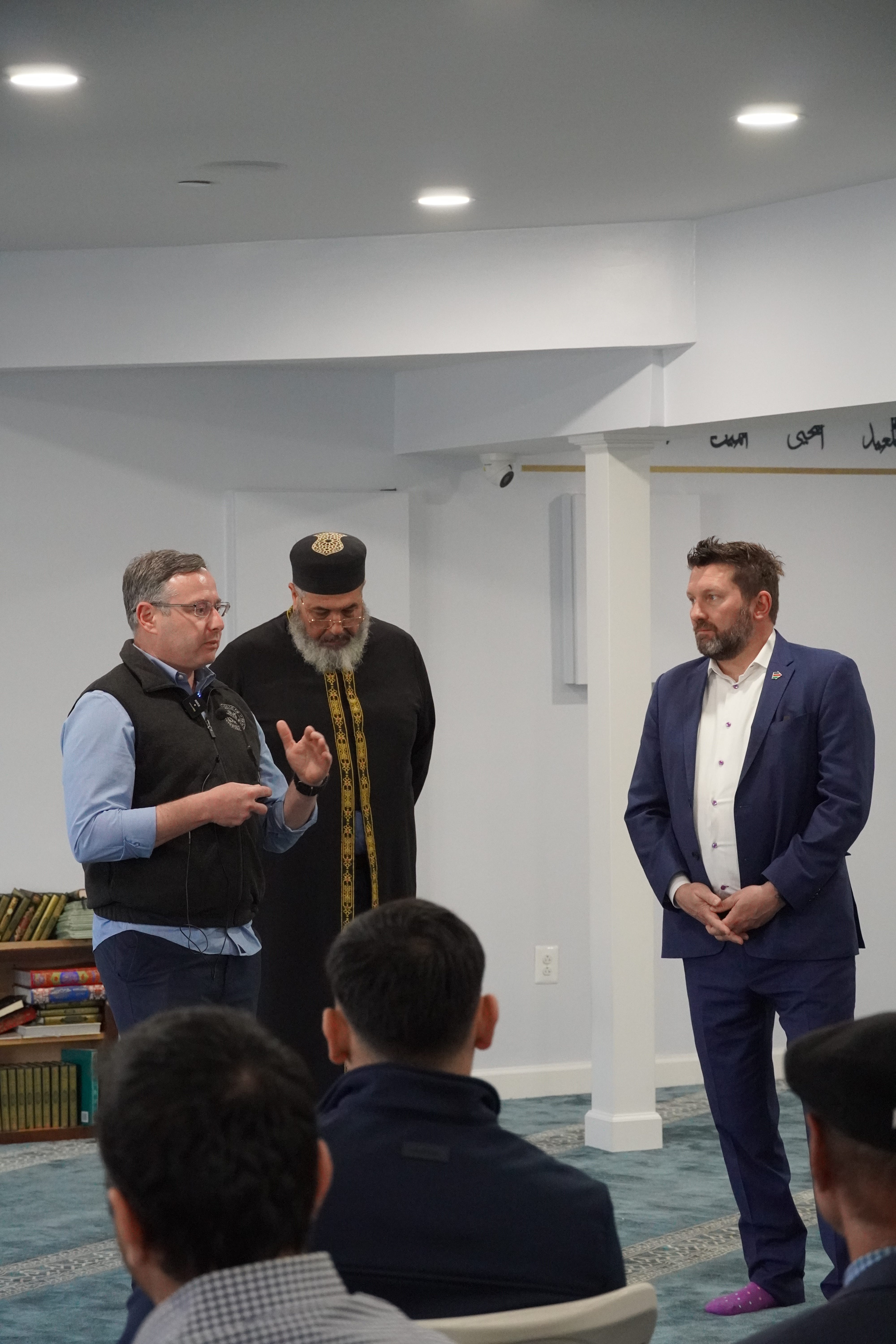
We heard firsthand what the consequences of recent decisions look like.
One Afghan ally who served as locally employed staff at Embassy Kabul shared his story. He was evacuated during the withdrawal and went on to work at CARE, helping other Afghans navigate the Enduring Welcome pipeline. His asylum case has been approved, but he still has not received a green card. His work authorization expires in May, and with USCIS not processing green cards for Afghans, he does not know what comes next.
Another voice in the room was familiar. Ehsan, a Marine and longtime member of this community, spoke about his brother who remains stuck at Camp As Sayliyah. His story underscored a reality too often overlooked: for many veterans, this is not an abstract policy issue. Their families are still directly affected.
We also heard from an Afghan with a pending asylum claim that has stalled without explanation. Because of the pause in adjudications and recent policy changes, he is unable to access food assistance, secure stable work, or take the basic steps needed to rebuild his life. The system is not just slow, it is leaving people without options.
These are not isolated stories. They reflect a broader pattern.
We are grateful to Imam Sherif from Masjid Aliya for providing the space and to Representative Vindman for bringing people together to listen, engage, and ask hard questions. As a refugee himself, he made clear that he understands what is at stake and has shown a clear commitment to standing with those who stood with us, both Afghan and Ukrainian allies alike.
We were also joined by longtime AfghanEvac partners, including Samad, whose continued leadership and presence in moments like this make a difference.
Listening matters. But what comes next matters more.
The challenges raised in that room are not new, and the consequences of inaction are already being felt.
Update on Camp As Sayliyah
Nearly two weeks after the March 31 deadline passed, Afghan families at Camp As Sayliyah remain in limbo, with no clear timeline for movement and no consistent communication about what comes next.
These are families under U.S. authority who were told to expect progress. Instead, they are navigating uncertainty without reliable information or a defined path forward.
This is not just a missed deadline. It is part of a broader pattern.
When timelines shift without explanation and decisions are delayed without clarity, it erodes trust and makes it harder for families to plan, prepare, or feel secure.
And increasingly, it raises a harder question: is the system struggling to move forward, or is it being allowed to stall?
Speaking truth to power
Last week, longtime AfghanEvac team member Pete Lucier published a powerful op-ed in The Washington Post that cut through the noise and made something very simple clear: leadership is not about what you say, it’s about what you do when it matters.
That message is only more relevant now.
In the days since, we’ve seen continued delays, growing confusion around visa processing, and new information that raises serious questions about the direction of this effort. The gap between rhetoric and reality is no longer theoretical. It is playing out in real time.
Pete’s piece lays down a marker. It reflects what veterans, advocates, and Afghan families are already saying: promises were made, and those promises require follow-through.
Secretary Mullin has been clear in his words. He has spoken forcefully about standing with Afghan allies.
Now comes the harder part.
We hope he hears this message, not as criticism, but as a call to lead. Because at this stage, alignment between words and actions is not optional. It is the difference between a system that works and one that leaves people behind.
Battle Buddies in New York
This week, veterans will show up in New York as part of our Battle Buddies initiative, standing alongside Afghan allies navigating immigration proceedings.
This is what accountability looks like on the ground.
Not statements. Not positioning. Presence.
Veterans who served alongside Afghan partners are making it clear that these relationships did not end in 2021. They continue now, in courtrooms, in communities, and in the choices we make about whether to stand with those who stood with us.
This effort will continue to expand. And it will require more people willing to step forward.
In the Press
Trump Team Pushes to Relocate Afghans in Limbo on U.S. Mideast Base — Wall Street Journal
Afghanistan and Pakistan agree to explore a solution after weeks of fighting and hundreds of deaths — Associated Press
US resumes processing Afghan visas that will result in denials, says rights group — Middle East Eye
ICE released an Afghan interpreter after three months in detention. Now officers have arrested his teenage son — The Independent
US has let in 4,499 refugees since October - all but three were South African — BBC News
This moment is no longer defined by uncertainty alone. It is defined by direction.
We are seeing how decisions made over the past several months are shaping outcomes now, slowing processing, narrowing pathways, and leaving families in prolonged limbo.
None of this is inevitable.
These are choices. And different choices remain possible.
We are continuing to push, with Congress, with the administration, in court, and alongside partners here and abroad.
Stay engaged. Keep asking questions. Keep showing up.
Because what happens next will depend on whether people are willing to insist that commitments are not just remembered, but honored.