


I say this a lot, and I’ll keep saying it: showing up is the love language of advocacy.
It is the most important thing any of us can do. Not posting. Not venting. Not waiting for someone else to fix it. Showing up, in a courtroom, at a hearing, on a phone call, in a family’s living room on one of the worst days of their lives.
This week, a lot of people showed up.
Two federal judges showed up for the plaintiffs challenging the USCIS benefits pause and issued the first real rulings against it.
A bipartisan House majority showed up to extend TPS for Haiti.
Our Battle Buddies volunteers showed up in New York to build in-roads with people showing up every single day in the courts there.
I showed up at Zia’s house to sit with a family whose son is still in ICE custody.
Ellen Smith at Keeping Our Promise showed up with me on WXXI.
The lawyers at AILA, IRAP, and Red Eagle Law showed up in briefs, on dockets, and in front of judges.
This week’s is a long one, but it’s all important.
Here’s what we’re seeing, what it means, and how you can show up too.
Action Items
Donate today. Battle Buddies, litigation support, pipeline case management, press, and congressional engagement all run on people who give what they can.
Share Rihan’s story. He is a Connecticut high school senior who wants to be a cardiologist. The more people who know his story, the harder it becomes to disappear him.
Remind your networks there is no back door. Every Afghan national is currently subject to the travel ban, regardless of status or pathway. Everyone. Anyone promising a shortcut, a connected attorney, or a special channel at State is either misinformed or exploiting desperate families. Help us shut that down.
Visa interviews are scheduled. Denials are guaranteed.
This is the most important operational item in this week’s update.
Afghan nationals, and nationals of other travel-ban countries, are being scheduled for visa interviews abroad that will produce automatic denials under section 212(f) of the Immigration and Nationality Act. Applicants are not told at the time of scheduling that denial is guaranteed. They are given no guidance on what happens next. They are being asked to make complex, expensive, and often dangerous journeys to interviews that cannot produce a viable outcome. And a visa denial on a permanent record is not neutral. It can affect future applications, complicate waivers, and follow a person through the system for years.
We support the guidance from immigration attorneys at AILA and IRAP. AfghanEvac does not provide legal advice, and I am not an attorney, but the lawyers closest to these cases are raising a serious flag and you should listen to them.
They are recommending that clients from travel-ban countries postpone but keep active their scheduled interviews abroad, rather than travel to a predictable denial.
For applicants inside the United States, the posture is the opposite: show up, stay visible.
Anyone navigating an interview under current restrictions should consult a qualified immigration attorney before making travel decisions.
Watch this week: an interim final rule on refugee reinterviews may be imminent
We are hearing the administration may issue an interim final rule this week on the refugee reinterview program first announced through internal USCIS guidance earlier this year. The program, sometimes referenced as Operation PARRIS, targets the roughly 200,000 refugees admitted between January 21, 2021 and February 20, 2025, and would require many of them to sit for new interviews while their pending green card applications stay on hold.
The shift from internal directive to interim final rule matters. An IFR takes effect immediately, without the public notice and comment period a normal rulemaking requires. The administration does not have to hear from refugees, refugee-serving agencies, or the public before the rule binds them. That is not how you regulate 200,000 lawfully admitted refugees. It is how you get ahead of the legal challenges you know are coming.
A large share of Afghans admitted during that window, including thousands resettled through Operation Allies Welcome and the USRAP pipeline, fall inside this reinterview universe. Many are still waiting on green cards already delayed by the USCIS benefits pause. Adding a reinterview requirement on top of that pause does not strengthen vetting. It creates a second stall, applied retroactively, to people who already cleared the most rigorous security checks of any immigration population in the United States. Refugees International called the plan “vindictive, harmful, and wasteful.” That framing holds.
If the rule drops this week, we will publish a separate analysis. For now: if you are a refugee admitted during the 2021 to 2025 window, keep your address current with USCIS, stay connected to your resettlement agency, and talk to a qualified immigration attorney about what to do if you receive a notice. For why “more vetting” is pretext, not policy, see our Vetting explainer.
Strategic Litigation Wins We’re Tracking
Since December, USCIS has been sitting on green card, work permit, and naturalization applications filed by people from 39 travel-ban countries, including Afghanistan. Files that should have been moving have just been frozen. This week, two federal courts said that can’t keep happening to the people in front of them.
Doe v. Trump (Massachusetts). On Friday, a federal judge ordered USCIS to stop applying the freeze to the plaintiffs in the case, a group that includes Afghans with pending green cards and work permits. It’s a pause on the pause while the case gets briefed. It doesn’t unfreeze every Afghan file in the USCIS queue, but it stops the bleeding for the families who sued.
Behdin v. Edlow (Northern California). A magistrate judge enjoined the Pause as to plaintiffs with pending I-765 employment authorization applications and ordered USCIS to adjudicate their applications within 180 days from the receipt date of each individual application. Red Eagle Law, which has been running some of the most aggressive litigation against the pause, is counsel on this one.
Why this matters. These are narrow rulings. They do not automatically help every Afghan with a stalled case. But until this week, the USCIS pause was moving with zero judicial friction. Two federal courts, in two different districts, have now said plainly that the agency cannot freeze people indefinitely based on national origin. That changes the ground for the next round of cases.
Compliance is the next fight. The government has a track record of slow-walking court orders in immigration cases, and we will be watching. The most current, careful tracking of this litigation is being done by Press Unpause. They showed up to track the cases no one else was tracking, and if you want to follow this in real time, they’re the ones to follow.
Camp As Sayliyah: pressure to self-deport, flights to Kabul, and rumors that will not die
The State Department’s self-imposed March 31 deadline to empty Camp As Sayliyah came and went nearly three weeks ago with no public accounting and no consequence. What is happening instead is worse than a missed deadline.
Residents tell us the camp is actively pressuring people to self-deport to Afghanistan. Around 200 people have now registered for “voluntary return” to Kabul, with flights from Doha expected to begin at the start of next month. And the financial offers being made to get people onto those flights are going down, not up. When residents asked for the return payments to be increased, State Department leadership instead reportedly cut the amounts from $4,500 to $4,100, and from $1,200 to $900. That is not a negotiation. That is coercion applied to people who already fled the country these flights are headed back to.
Meanwhile, many countries have been floated as third-country destinations for those who will not return to Kabul. One of the craziest names circulating has been the Democratic Republic of the Congo, which is itself in the middle of an active conflict and a severe refugee crisis. We stand against any solution that puts people in harm’s way or violates international protection norms and law, full stop. The principle of non-refoulement, the obligation not to send people back into danger, is not a technicality to be worked around. It is the line. Sending people to Kabul crosses it. Sending them to a war zone with no durable protection crosses it.
At least 150 of those still at CAS are immediate family members of U.S. service members. The United States moved these people to that base. The United States owes them a destination that is durable, safe, and consistent with the law. Not a one-way flight to the country they fled with less money than they were originally offered. Congress and the public need to see any real proposal before any family boards a flight, and they need to see the full picture of how people are being pressured to leave. We will be watching, and we will name what we see.
Do not deliver to military bases if you lack durable status
Attorneys in San Diego have documented dozens of arrests at the gates of Camp Pendleton. Drivers working for Uber, Lyft, DoorDash, Grubhub, and Roadie, who are lawfully authorized to work but do not hold green cards or citizenship, are being flagged by military police at the gate and handed to ICE.
This is part of a larger pattern. NOTUS reported this week that the administration has repurposed at least six unrelated federal programs, including State Department resources for countering election interference, senior FEMA positions, and the DHS Countering Weapons of Mass Destruction Office, to support ICE operations. A former DHS official called it “the biggest reorienting of federal resources toward a single end since 9/11.” These gate-side arrests are not isolated incidents. They are operational reality. If you do not have durable status, avoid military installations right now.
Pakistan is pushing people back, and the U.S. broke the deal that held them safe
Since the Torkham border reopened on March 31, Pakistan has sharply accelerated its forced deportation of Afghan refugees under its Illegal Foreigners Repatriation Plan. More than 146,000 Afghans have been deported from Pakistan in 2026 alone, on top of more than a million forcibly returned in 2025. That includes people holding Proof of Registration cards and Afghan Citizen Cards, not just the undocumented. Refugees International called on Pakistan last week to halt the deportations and described the campaign as a direct violation of non-refoulement, the same principle that should be guiding U.S. decisions about where to send people from CAS.
This did not have to happen. In the fall of 2023, after sustained diplomatic engagement, the United States and Pakistan reached a practical understanding. Pakistan agreed not to harass a defined population of Afghans in U.S. immigration pathways, including USRAP P1/P2 refugees, SIV applicants, and humanitarian parole seekers. The United States, in turn, committed to actually processing them. For a time, the arrangement worked. Arrests declined. Deportations slowed. Embassy letters were honored.
In January 2025, the Trump administration halted refugee processing and broke the U.S. end of that deal. Pakistan resumed harassment, detention, and deportation of U.S.-linked Afghans almost immediately. Afghan SIV and P1/P2 applicants in Pakistan, people the U.S. government itself had identified, documented, and in many cases physically relocated into U.S.-sustained housing, are now being swept into the deportation machine. No One Left Behind reported seven principal applicants deported from their safe houses as of January 2026. The squeeze does not stop when U.S. processing stops. It intensifies, because the people in the pipeline have nowhere else to go.
And the country they are being pushed back into is not stable. The UN reported this week that more than 94,000 Afghans have been newly displaced inside eastern Afghanistan by escalating clashes between Pakistani forces and the Taliban, with cross-border shelling and airstrikes hitting Khost, Kunar, Nangarhar, Paktia, and Nuristan. The path home, for most of these families, leads straight through an active conflict zone and back into danger.
We cannot solve the Pakistan deportation problem from Washington, but we can stop making it worse. Resume processing. Honor the embassy letters the U.S. government issued. Recognize that foreseeable harm is not acceptable harm.
The House showed up for Haiti. Afghan advocacy will need the same muscle.
The House passed H.R. 1689 via discharge petition on April 16, extending Temporary Protected Status for Haiti by three years. All Democrats and 10 Republicans voted yes. The bill still needs the Senate and the president, and neither is likely at this moment. But the House vote showed that a bipartisan majority can be assembled when people show up for a population under threat.
Afghan TPS, additional SIV visas, and the Enduring Welcome Act could all use the same muscle. AILA, CWS, Global Refuge, and Refugee Council USA organized hard for this discharge petition vote. That is the playbook. Tell your representatives you saw it. And let’s get this party started.
Coalition partners showing up: Afghan women’s education
Some of the most important work happening in this fight is being done by coalition partners many readers haven’t met. The Afghan Scout Relief Fund, run by Steve Gates, is one of them. Their work focuses on getting Afghan girls and young women out of Afghanistan, where women are now banned from secondary and higher education entirely, and into schools in the United States. It is direct, unglamorous, and exactly the kind of effort that complements what the rest of the coalition is doing on the policy and litigation side.
Their work is not directly connected to the wartime allies mission that anchors most of what we do. We stand up for any Afghan who now has a relationship with America, and that includes the students ASRF is fighting for. AfghanEvac stands with our coalition partners and with every Afghan woman and girl whose future is on the line.
ASRF is moving on two tracks right now, and both deserve visibility.
The first is H.R. 7669, the Rejecting the Erasure of Afghan Women and Girls Act, a bipartisan bill led by Rep. Sydney Kamlager-Dove that would require the State Department to formally assess and report on Taliban policies toward Afghan women and girls. The bill cleared House Foreign Affairs in March with members from both parties voting yes. It is exactly the kind of measure that should not be controversial. It is also exactly the kind of measure that goes nowhere without coalition pressure pushing it all the way through the House and the Senate.
The second is a congressional sign-on letter sponsored by Rep. Don Bacon calling for case-by-case student visa exemptions for Afghan women and protection of Optional Practical Training (OPT) status for those already studying in the United States. ASRF has been driving this effort and is working to get additional congressional signatories over the next month. If you are on the Hill, ask your member to sign. If you are an advocate, ask your delegation what they are doing about it.
This is what showing up looks like at the coalition level. Direct service partners and policy partners working in parallel, with a bill in one hand and a letter in the other.
Great work, Steve and Aydin.
Rihan is still in custody
Rihan is 19, a high school senior in Connecticut, and he wants to be a cardiologist. His father Zia, an Afghan interpreter whose case helped inspire Battle Buddies to expand beyond the courtroom, was detained for three months last year. This week agents took his son. A judge blocked his transfer out of Connecticut. ICE moved him to Massachusetts anyway.
I went to see the family this week. Sat with them and their loved ones. There was nothing useful I could say that they didn’t already know. That wasn’t the point. Rihan’s green card application is pending. Detaining the same family twice, while they follow the law, is not enforcement. It is arbitrary and unjust. Senator Blumenthal called it appalling. Governor Lamont called it intimidation. Cheshire’s superintendent called it a miscarriage of justice. They are right.
Organizational News
Battle Buddies. Our veterans deployed around the country this week to stand alongside Afghan allies in immigration proceedings. That is showing up in its purest form, literally putting yourself in the room so someone facing deportation isn’t facing it alone. When Battle Buddies volunteers are present, the no-detention record holds. If you have an upcoming immigration appointment, sign up today.
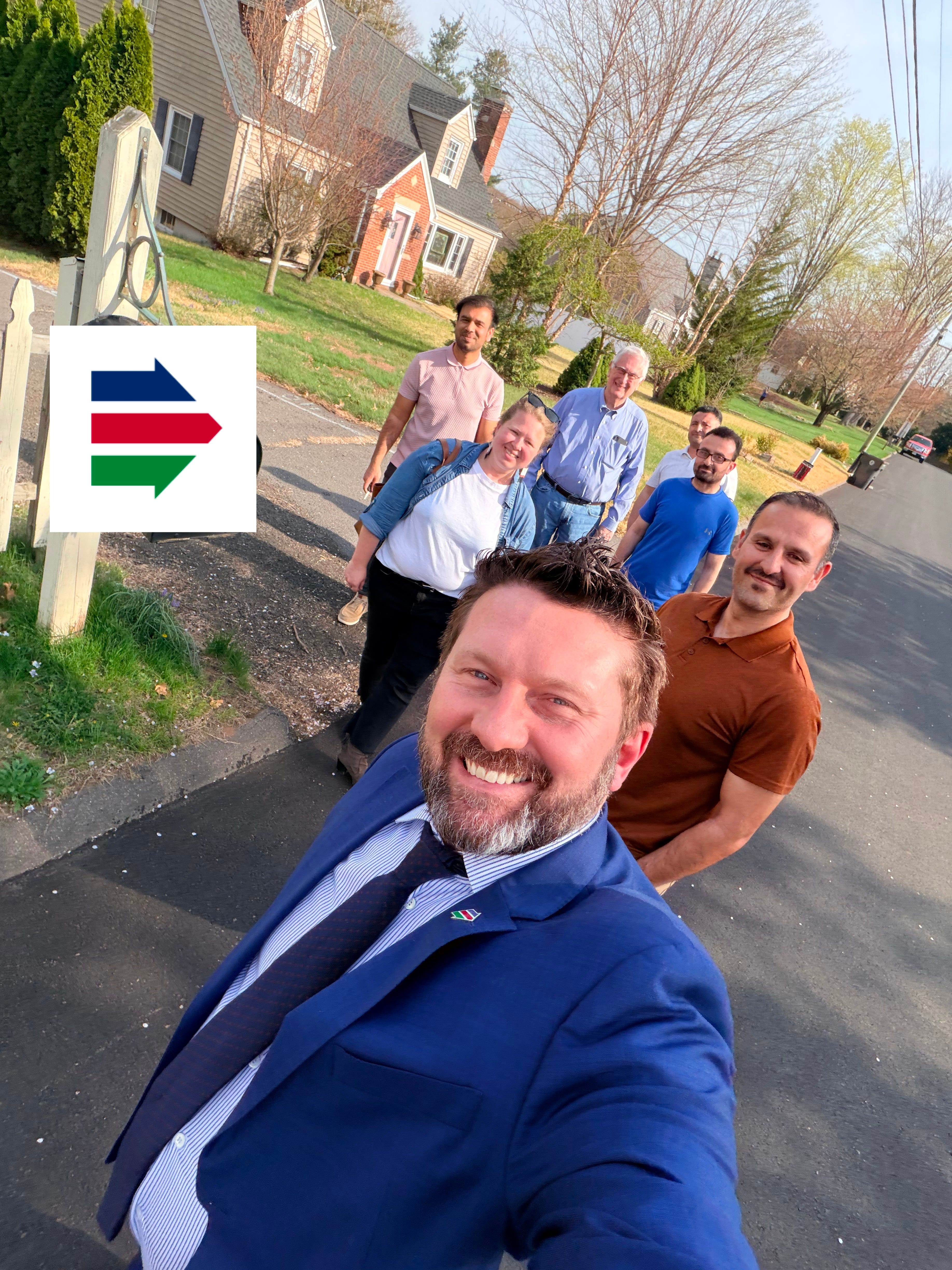
Visiting Zia’s family. I spent time this week with Zia, his family, and the attorneys working Rihan’s case. There is no substitute for showing up in person when a family is in the middle of something like this.
Elena’s Light. We were glad to participate in Elena’s Light’s programming this week. Fereshteh Ganjavi and her team in New Haven do extraordinary direct-service work with Afghan refugee women and children. They show up day in and day out, in ways most of us never see.
WXXI Connections with Ellen Smith. I joined Ellen Smith of Keeping Our Promise on WXXI’s Connections this week to talk about where the SIV program actually stands. Ellen shows up for Afghan families in Rochester every single day. Her perspective is worth your time.
The Bush Institute launches the United States Afghan Women’s Coalition. The George W. Bush Institute formally launched the Coalition this week, building on two decades of work through the U.S.-Afghan Women’s Council. They’ve been showing up for Afghan women for twenty years. This is them showing up again.
In the Press
Afghan high school senior detained by ICE after father was also detained NBC News
Trump administration still blocking Special Immigrant Visas, AfghanEvac says WXXI Connections
ICE has arrested dozens of delivery drivers at the gates of a San Diego military base Capital & Main
US explores third-country resettlement for stranded Afghan allies in Qatar Ariana News
Showing up is the love language of advocacy and it looks different in different rooms.
It looks like a judge in Boston reading a motion carefully and ruling on Friday afternoon.
It looks like a magistrate in San Jose bifurcating relief because she took the time to understand the filings.
It looks like 225 House members from both parties voting for Haitian families they will never meet.
It looks like a veteran in a courtroom in Queens standing next to an ally they served with.
It looks like Ellen Smith in a radio studio in Rochester, and Fereshteh Ganjavi in a classroom in New Haven, and Steve and Aydin Gates moving a letter through Congress for Afghan women who deserve a chance at the education their country has stolen from them.
It looks like Press Unpause updating a docket tracker at midnight because someone has to.
It looks like the advocates, families, and attorneys in Pakistan who keep waiting, keep documenting, and keep holding the United States to the promise it made them, even after the United States walked away.
It looks like you, reading this, and deciding what to do next.
Every outcome I wrote about this week is the result of a choice someone with authority is making, and every one of them can be unmade by someone with the same authority choosing differently. Our job is to make sure the people with that authority feel us in every room where those choices are made. That is how this ends well.
Keep showing up. We will too.
We are furious. We are focused. And we are not going anywhere.
Go Deeper
If this update raised questions you want to pull on, our explainer library breaks down the policy and legal picture in more detail.
Pakistan Explainer — how the U.S.-Pakistan arrangement held, then collapsed
Camp As Sayliyah Explainer — who is there, how they got there, and what they are owed
SIV Wind-Down Plan — the leaked State Department plan to end the program
SIV Current State — where processing actually stands today
Travel Ban — how the Travel Ban proclamation sweeps in every Afghan national
AfghanEvac Issues Primer — the full picture since January 2025
Full library at afghanevac.org/explainers.
Previous Updates