


Last week underscored both the fragility and urgency of the Afghan relocation effort. Congress held two hearings, the administration signaled potential changes to refugee protections, and critical processing steps remain stalled.
We also launched a bunch of new explainers and, because of that, launched an overarching explainers page. This page will iterate over time.
Take action
We’ve launched a new explainer hub to help you understand what’s happening, and what it means for Afghan allies. Share it widely. Misinformation thrives in silence.
Sign up to be a Battle Buddy: afghanevac.org/battle-buddies
Buy some AfghanEvac merch and support our work in style.
Operational Snapshot
Approximately 260,000 Afghans remain in the Enduring Welcome pipeline across 90 countries.
178,000 have Chief of Mission approval and are awaiting interview, including 35,000 principal applicants plus their family members.
Tens of thousands remain pending Chief of Mission approval.
Approximately 60,000 Afghans were referred through USRAP.
15,000 are in the family reunification pipeline.
Special Immigrant Visas
SIV visa issuance remains paused. Chief of Mission processing and related application steps are expected to resume.
A federal court has ordered the resumption of SIV application processing, but visa issuances have not resumed. If you have a valid visa in your passport, it is still good.
The application deadline has passed. No new applications may be submitted, but existing cases should continue processing.
If you or a loved one has a scheduled visa interview and is subject to travel restrictions, seek legal counsel immediately. In most cases, attorneys are advising postponement.
Visa Allocation
There are approximately 35,000 Chief of Mission approved principal applicants awaiting interview, but only about 5,900 visas remain available under current statutory caps.
Absent congressional action to increase visa allocation, current numbers will not meet demand.
USRAP P1/P2
The United States Refugee Admissions Program remains suspended for all Afghans. Only the President can reverse this suspension.
Relocation flights are halted, and the State Department has announced no plan to resume operations.
Without legislative action, including passage of the Enduring Welcome Act, large-scale relocation is unlikely to restart.
Two Congressional Hearings
Last week featured two Congressional hearings that related to our shared interests: a HFAC South and Central Asia subcommittee hearing on South Asia and a shadow hearing on Afghan allies. The first was compelled by the second.
The South Asia focused hearing opened with SCA Subcommittee Chairman Bill Huizenga asking when the Afghanistan policy will be available for review.
Ranking Member Sydney Kamlager Dove then asked several questions about Afghan allies, including about the fate of those currently stuck at Camp As Sayliyah.
The shadow hearing was absolutely incredible. The witnesses, all of whom came from the AfghanEvac community, did an extraordinary job. We all owe them a debt of gratitude for their professionalism. I’m going to share a couple important moments from the hearing, but you can check out our YouTube playlist for the full hearing, and testimony from each witness on our YouTube.
Zia Ghafoori from the Interpreting Freedom Foundation made very clear the impact of the United States government’s rhetoric and policy changes on Afghan families.
Commander Catalina Gasper from Task Force Argo did a great job of laying out why we all do this and when she will consider her mission over. Rep. Kamlager Dove responded, watch below.
Jessica Bradley Rushing from AfghanEvac laid out what the government has done to our allies over the last 12 months.
And Dr. Kyleanne Hunter from IAVA made it clear that veterans across the nation feel a shame worse than they felt in August 2021 because things were getting better before the government deconstructed Enduring Welcome.
We are grateful to Representative Sydney Kamlager-Dove for convening the first hearing of the 119th Congress focused on this issue.
Some in the advocacy community chose not to participate in the shadow hearing out of concern that it might be perceived as partisan. We take a different view. We participate wherever Afghan allies are being discussed. Engagement is not endorsement. Declining to show up does not advance lawful pathways or durable solutions.
Advocacy requires a full toolkit. There are moments for collaboration at the table and moments for outside pressure. Both have their place. Our responsibility is to use every appropriate tool in service of our allies.
Shadow hearings are a longstanding congressional practice designed to elevate issues that may not otherwise receive formal attention. Every congressional office was invited to attend, and we understand the convening team extended similar invitations.
Congressional Engagement
In addition to ensuring every office on the hill knew about the shadow hearing, we engaged with longtime friends of Afghans for updates on the current state and discussions about existing and potential future legislation that would help our allies succeed.
International Engagement
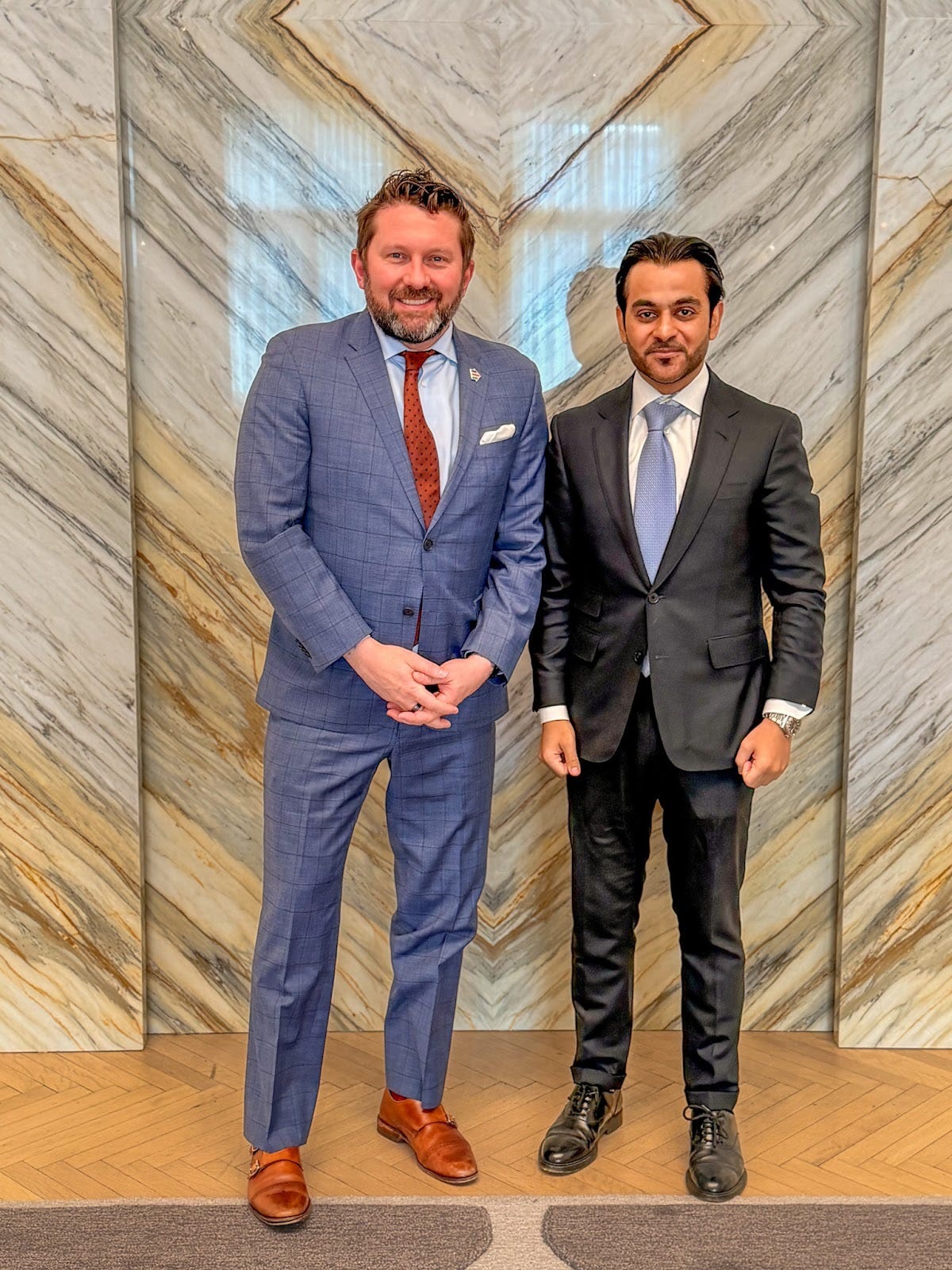
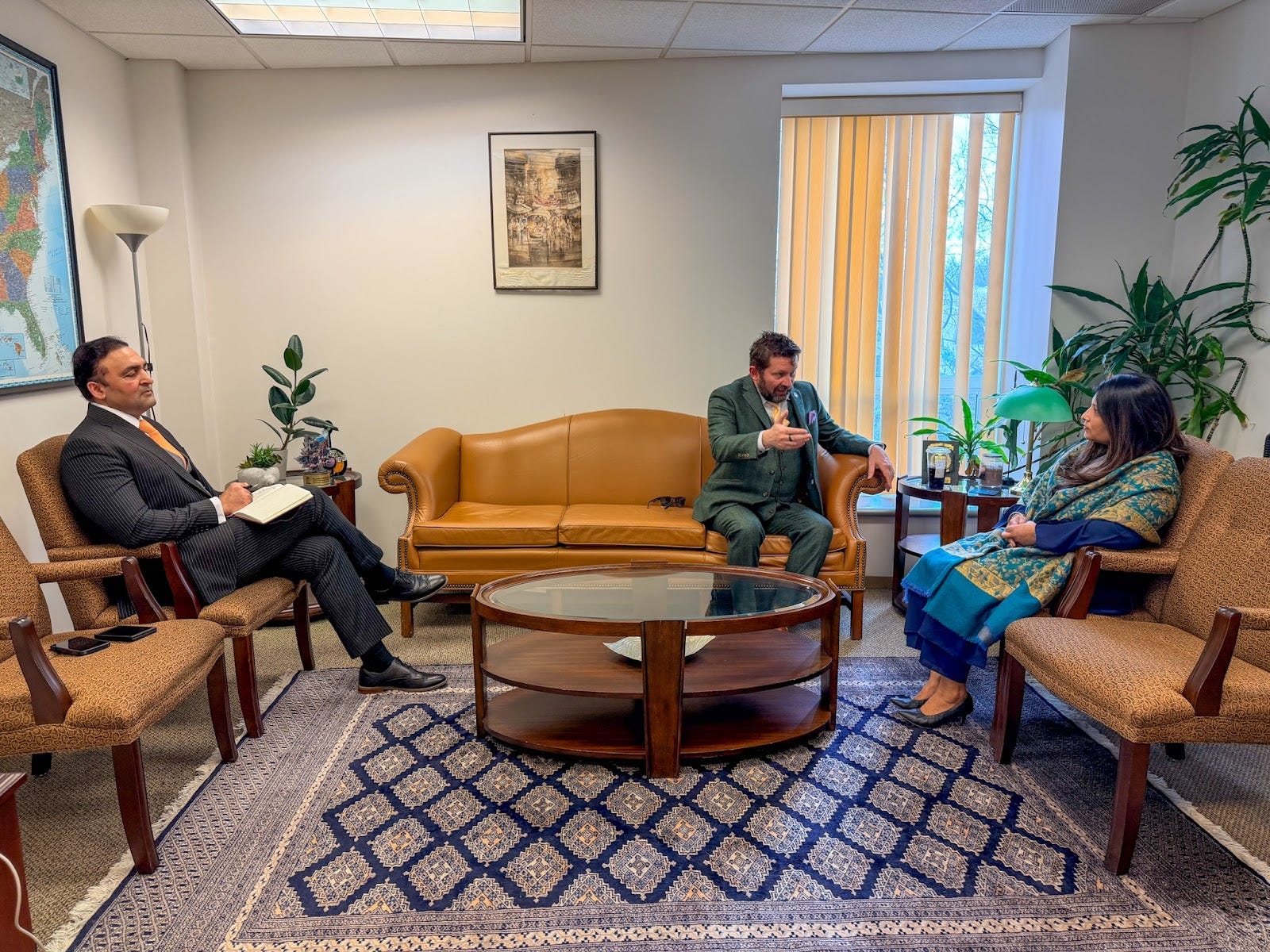
While in DC, I met with leaders from Qatar, Pakistan, Kosovo, and more. We discussed the ongoing injustice faced by our friends. Also, there were numerous discussions during the Munich Security Conference related to these efforts.
Qatar
I met with Qatari officials to discuss a variety of issues, including the fate of our allies at Camp As Sayliyah. We do not have updates on this topic right now but the conversations continue and we are making sure to lift the voices of our allies who are trapped at CAS.
Pakistan
On Monday of last week, I sent this letter to Ambassador Rizwan Sheikh of Pakistan. Later in the week I met with the Deputy Chief of Mission and the Chancery leader from the Embassy in the Untied States and we had a lengthy discussion about the plight of our allies in the region.
There was no concrete progress made but they gave me assurances they would pass on our asks (mercy for the Afghans in Pakistan and some more time for Afghanistan policy to be worked out to those people can ultimately come here, as the U.S. agreed to previously).
Potential major changes to protections for refugees and asylees
You may have seen our explainers on recent changes to the Board of Immigration Appeals (BIA) and the Secretary of Homeland Security’s request to the Attorney General that longtime precedent be overturned regarding refugee protections upon arrival.
What you need to know is that these things taken together are an attempt to streamline the removal of immigrants, Afghans and otherwise. If implemented, these changes would allow DHS to place newly arrived refugees and asylum seekers into expedited removal if they lack permanent status. This would fundamentally alter longstanding protections.
Read the explainers for more info.
https://afghanevac.org/doj-refugee-changes
https://afghanevac.org/bia-rule-explainer
Battle Buddies
Battle Buddies is still going strong. If you have an upcoming court date, please let us know as far in advance as possible so we can assign Battle Buddies or recruit and train new Battle Buddies if they’re not already in the region.
Press
Special Immigrant Visa Program Needs Resuscitation, but it’s Not Dead Yet – Reason
US pays Afghans stranded in Qatar to repatriate, plan labeled ‘betrayal’ – Reuters
The return of millions of Afghans from Pakistan and Iran pushes Afghanistan to the brink, UN warns — Associated Press
The numbers are real, the consequences are real, and so is our responsibility.
This has never been a partisan cause. It is a matter of honoring commitments, upholding the rule of law, and standing by those who stood with us. We will continue to engage any leader, in any party, who is willing to work toward lawful pathways and durable solutions.
Policy can stall, politics can shift, but our commitment will not.
We will keep showing up, speaking clearly, and pushing until our allies are safe and the United States keeps its word.