

This is the week the avoidance runs out of room.
Secretary of State Marco Rubio testifies before Congress four times between June 2 and 3, and for the first time the members asking the questions will have a fulsome account of what has been done to America’s Afghan allies. We assembled that account with the country’s leading resettlement agencies and put it in front of every office that will hold a gavel.
The rest of the week filled in around that fight. A close Rubio aide was quietly promoted to a top White House post.
A bipartisan pair of House members opened a letter demanding answers on the roughly 1,100 Afghans still trapped in Qatar.
A hard SIV paperwork deadline lands Friday, June 5.
And in a federal courtroom, one ally was pulled back from the edge of deportation, a reminder of what happens when our people show up and refuse to let the paperwork win.
There is real work to do before tomorrow morning. Start here.
ACTION THIS WEEK
Tell your member of Congress to ask Rubio about Afghans
Secretary of State Marco Rubio testifies before four committees on June 2 and June 3. If your representative or senator sits on one of these committees, their staff has what they need to make Afghans part of the record.You can also read our Memo to Congressional Offices, the Questions Tipsheet we suggested for members, and the letter we led with the CEOs of the nation’s leading resettlement agencies on that same site.
Call, write, and post. Get your Representative on the bipartisan CAS letter
Reps. Jason Crow and Don Bacon are leading a bipartisan letter pressing the State Department for answers on any plan to move the roughly 1,100 Afghans held at Camp As Sayliyah.
This is a three-part push. Call your representative’s office, send the letter through our system, and post the ask so others in your district do the same. The deadline for offices to sign on is end of day Monday, June 8. Everything you need is at afghanevac.org/cas-action.
Plug into the programs that put people to work
Advocacy from Washington matters, and so does the work happening in driveways, courtrooms, and living rooms across the country. Two programs make it real.
Our Afghan Community Ambassadors Program trains and equips Afghan community members to lead advocacy in their own cities, and you can learn more and sign up at afghanevac.org/community-ambassadors.
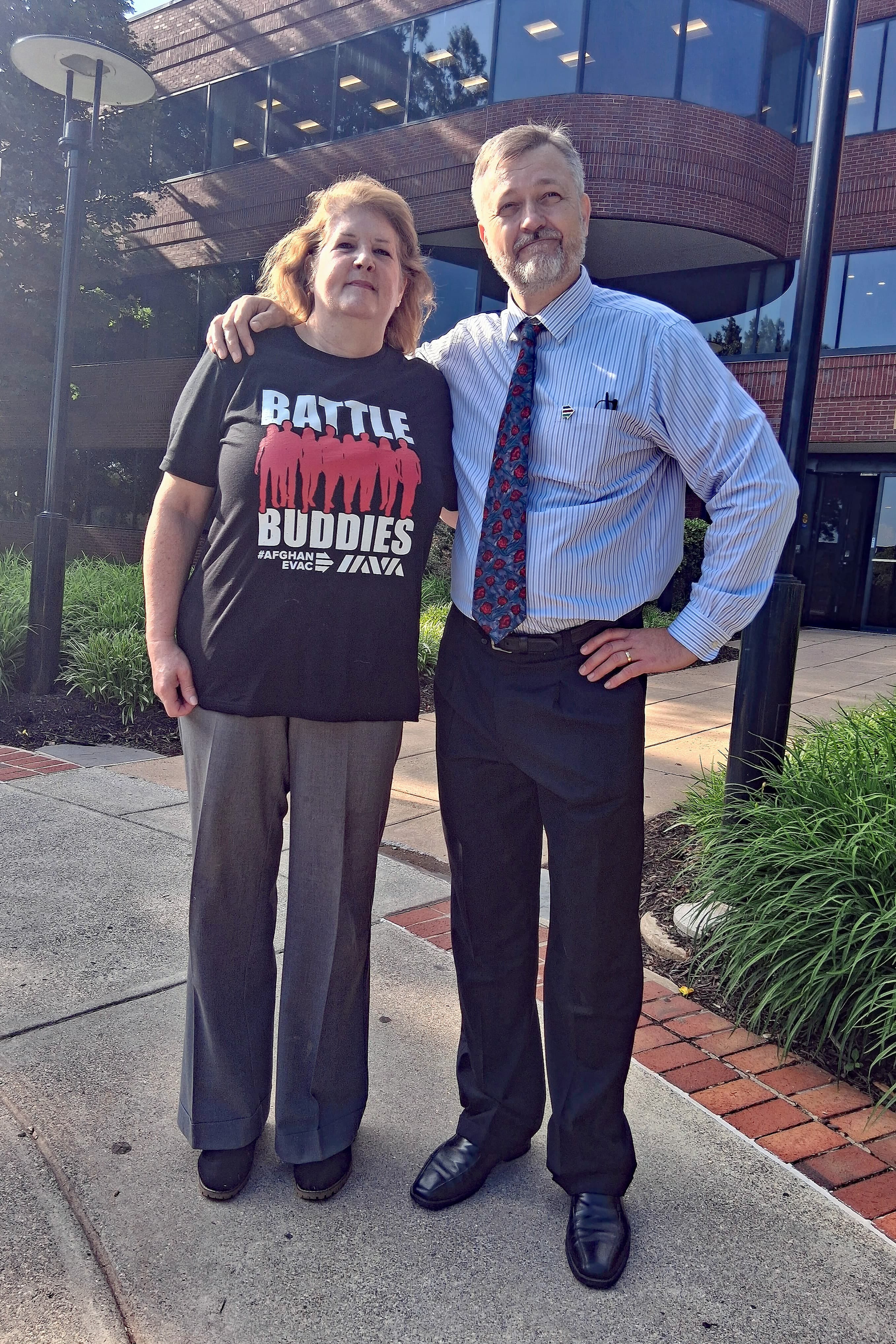
Battle Buddies pairs volunteers with allies who have to show up for immigration check-ins and court dates, and the program’s record of no detentions when a Battle Buddy is present still stands. Learn more at afghanevac.org/battle-buddies.
You can also print our flyers and put them up where your community will see them, at go.afghanevac.org/flyers.
Fund the fight. This work runs on support from people who refuse to look away. Give at afghanevac.org/donate.
Your advocacy, on the map
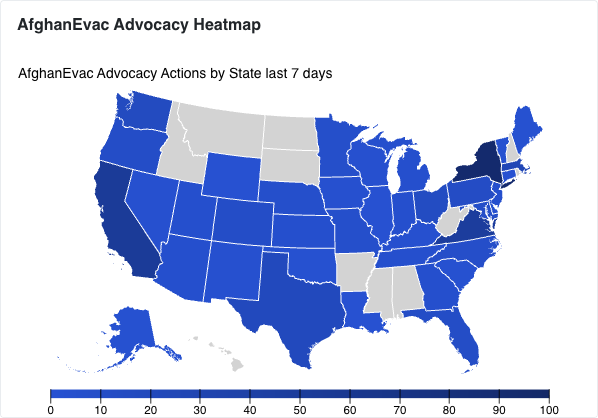
We launched a new advocacy system this week, and it is already working. In less than one week, our members have taken more than 1,000 individual actions across 40 states. The tool lets you act on a letter or a campaign in a single click, and it lets us see where the energy is building and where it still needs a push. This is the first version, and we are going to keep improving it. The goal is simple. Make it easier for you to be heard, and easier for us to turn that into pressure where it counts.
A win worth naming
Good news is rare in this fight, so we are going to sit with it. This past week, an Afghan ally we will keep anonymous, a Special Immigrant Visa recipient and a lawful permanent resident, walked into a federal courtroom facing the loss of everything he had been promised. The government had thrown his status into question on a strained reading of the recommendation-letter rules that would have required something the law does not. He was placed in removal proceedings over it. In plain terms, an American green card holder was at risk of being deported to the Taliban.
He did not face it alone. Our AfghanEvac Battle Buddies team stood with him in court, the way they have shown up for allies across the country. His legal team did exceptional work. And the judge saw the denial for what it was, ruling completely in our ally’s favor and calling out the weakness of the government’s position. On the strength of that ruling, his attorneys have moved to end the deportation case entirely, and the government has ten days to respond. We are keeping his name and face out of this because his family in Afghanistan remains at risk, and that caution is the whole point.
This is what the work looks like on a good day. One ally, one courtroom, one bad interpretation rejected. It matters beyond this family, because the same flimsy theory is being used against others, and this shows it can be beaten. When we show up, when the lawyers are sharp, and when a judge reads the record, the machine does not always win. Hold onto that this week.
They shut it all down. Now Rubio has to sit in the chair
Secretary of State Marco Rubio is scheduled to testify before four committees on June 2 and June 3, his first sustained appearances on the Hill since the scope of the collapse became undeniable. This week, we are making sure no member walks in unarmed.
Start with the number that says everything. The Department’s own SIV program update, released May 13, confirms zero Special Immigrant Visas issued to Afghan applicants since January 1, 2026. Of the 50,500 visas Congress authorized, 5,970 remain unused. Roughly 178,000 Afghans hold Chief of Mission approval and are waiting. The Department keeps conducting interviews. It is not issuing visas. A program that interviews people and then hands them nothing is not a program. It is a waiting room with no door.
The visas are only the start. A travel ban bars Afghans from entry. Temporary Protected Status has been terminated. The One Big Beautiful Bill Act stripped food assistance from entire categories of lawfully present people, and the chaos has been bad enough that even green-card-holding allies have been denied SNAP in some states. The May 27 refugee determination handed 10,000 slots to Afrikaners and named Afghans nowhere. Three Afghan refugees have been resettled this entire fiscal year. Three.
And roughly 1,100 Afghans are still trapped at Camp As Sayliyah in Qatar, sent there for final vetting and then left in place when the Secretary's Department froze the program around them. Around 800 are women and children. Roughly 150 are immediate family members of active-duty U.S. service members, the families of people serving in our military right now. They have been held in transit for more than a year, with no resettlement, no return, and no plan for their future. This is not a backlog. It is a population the Secretary is responsible for, abandoned in place.
Here is the part Congress needs to understand, because it is the whole argument. Almost none of this would be landing the way it does if Enduring Welcome had kept moving. Enduring Welcome brought allies here with durable status, the green cards and legal footing that shield a person from a benefits cut or a travel ban. The administration shut it off on day one and has spent every month since dismantling the machinery around it. The result is families waiting years for reunification, allies stranded overseas, and the cleanup dumped onto the nonprofits and volunteers who never should have had to carry it.
None of this is fate. It is a series of choices, and every one of them can be unmade. Judge Tanya Chutkan’s February 6 order requires the continued adjudication of Afghan cases, and the contrast between that order and a zero issuance rate is an oversight finding waiting to be made. We are asking members to convert every half-answer about review, consideration, or further study into a Question for the Record with a hard deadline, and to build the answers into FY27 report language. August marks five years since the fall of Kabul. The FY27 budget will tell the world whether the United States still believes a wartime promise is a promise to be kept.
The letter, signed by AfghanEvac and the country’s leading resettlement agencies
On May 29, ahead of Secretary Rubio’s testimony, we sent a joint letter to congressional leadership and the relevant committee leaders. We did not send it alone. The chief executives of six of the country’s principal resettlement agencies signed it with us, HIAS, Church World Service, Global Refuge, World Relief, the U.S. Committee for Refugees and Immigrants, and the Ethiopian Community Development Council. Seven organizations spanning faith traditions, humanitarian missions, and decades of resettlement work, agreeing on one thing without reservation. A promise made by Americans in wartime is a promise to be kept.
The letter puts the documented record in front of the members who will question the Secretary this week and asks them to require him to answer for it on the record. We wanted you to know it went out, and we want you to read it.
The June 5 SIV document deadline lands this week
If you or someone you are helping has a pending Chief of Mission application in the Afghan SIV pipeline, this Friday, June 5, is the deadline to get every supporting document in. This is the State Department’s own cutoff. Any letter of recommendation, employment verification, or additional document the Department has requested for a pending COM application must be submitted by 11:59 on June 5, sent to AfghanSIVApplication@state.gov. The application window for new COM requests already closed on December 31, 2025, so this is the last structured opportunity to complete a file that is already in the system.
Two things people need to hear clearly, because the confusion around this is real.
This deadline is only for supporting documents on a pending COM application. It does not apply to visa processing steps after COM approval, and it does not change appeal rights. If a COM denial letter arrives, the deadline to appeal is 120 days from the date of that letter, even if that date falls after June 5.
And none of this is contradicted by the fact that the Department has stopped issuing visas. Processing and issuance are legally separate. Judge Chutkan’s order requires the former to continue, and a complete file is what protects an applicant’s place when issuance resumes.
Get the documents in. The recommendation-letter and verification rules are exactly where the government has been manufacturing denials, including in the case we describe above, so precision on dates and supervisor details is not a formality. It is the difference between a file that moves and a file that gets rejected. IRAP has published current practitioner resources for getting this right, and our team can help you find the door.
The same small circle now runs the Afghan file at both State and the White House
Days before Rubio sat down in front of Congress, the administration moved to consolidate his authority. Mike Needham, Rubio’s State Department Counselor and the director of his Policy Planning Staff, has been promoted to Assistant to the President and Deputy National Security Advisor, the move first reported by Axios on May 26. Needham is one of Rubio’s closest and longest-serving aides. He ran Rubio’s Senate office as chief of staff for six years, and before that he led Heritage Action for America. He replaces Robert Gabriel at the National Security Council. Because Rubio is also serving as acting National Security Advisor, Needham now sits directly beneath him on the White House side of the house, while continuing to work hand in glove with the building he just left. Dan Holler, Rubio’s chief of staff at State and another veteran of both the Senate office and Heritage Action, steps into Needham’s old role.
Here is why this matters to us specifically. Needham and Holler are not unfamiliar names on this issue. They are among the senior State officials AfghanEvac has written to directly (since January 2025) about the deteriorating conditions at Camp As Sayliyah, including our urgent letters this winter when missile debris was falling on the camp. The men who received those letters have never once responded to a message from us about Afghans, not one, and now they are being elevated rather than held to account.
That is the accountability record in one sentence. The same officials, the same unanswered inbox, more power, and still no principal-level meeting and no answers on the people stranded in Qatar.
As Rubio testifies this week, members should put these names and this concentration of authority on the record, because there is no longer anyone left to pass the question to.
A bipartisan letter on the Afghans still held at Camp As Sayliyah
About 1,100 Afghans remain at Camp As Sayliyah in Qatar, the U.S. government facility where allies were sent for final vetting and onward movement to the United States. Around 800 are women and children. Roughly 150 are immediate family members of active-duty U.S. service members. They have been held in transit for over a year while the refugee program sits suspended. Reps. Jason Crow and Don Bacon are now circulating a bipartisan letter pressing the State Department for answers on any current or proposed plan to relocate that population.
The reason this letter matters is simple. Earlier this spring, senior State Department officials floated transferring the CAS population to the Democratic Republic of the Congo. The administration says it is no longer pursuing that agreement, but the proposal has never been formally rescinded, and on May 17 the World Health Organization declared the Ebola outbreak in the DRC and Uganda a public health emergency of international concern. A plan that was a betrayal when it surfaced is now a betrayal aimed at an active outbreak zone. The fact that it remains on the table at all tells you how thin the floor is for these families.
This is a choice, and it is a bipartisan one to fix. Reps Crow and Bacon have given every House office a clean, low-cost way to put the Department on notice.
Tell your representative to sign on before the June 8 deadline.
Meeting with Congressman Morelle
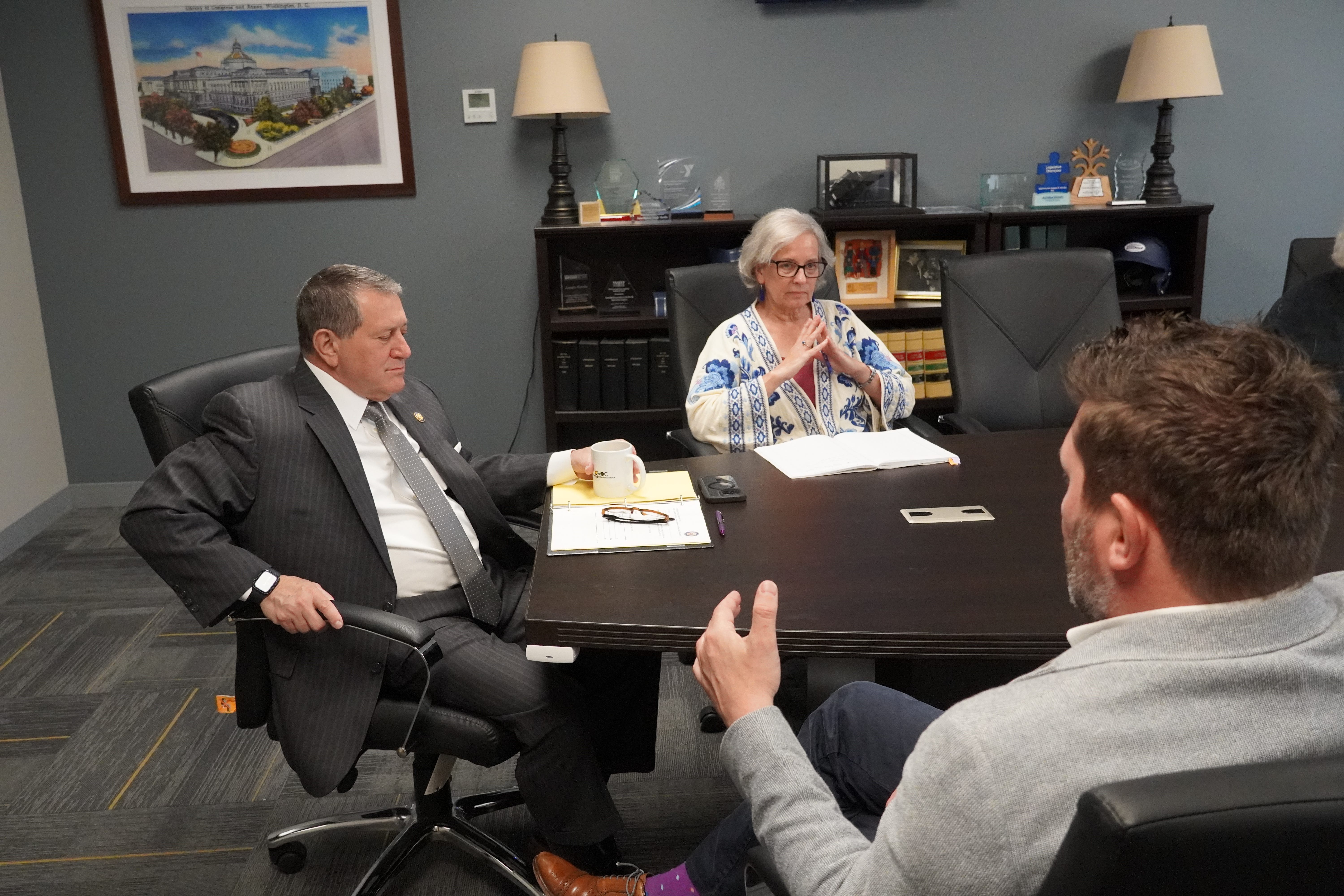
On Friday, we sat down with Congressman Joe Morelle in Rochester, alongside AfghanEvac member organization Keeping Our Promise, to walk through exactly where the pipeline stands and what his office can do to help make progress for our mission partners.
These meetings matter because they connect the national fight to the families living it in a specific district.
The Rochester Town Hall
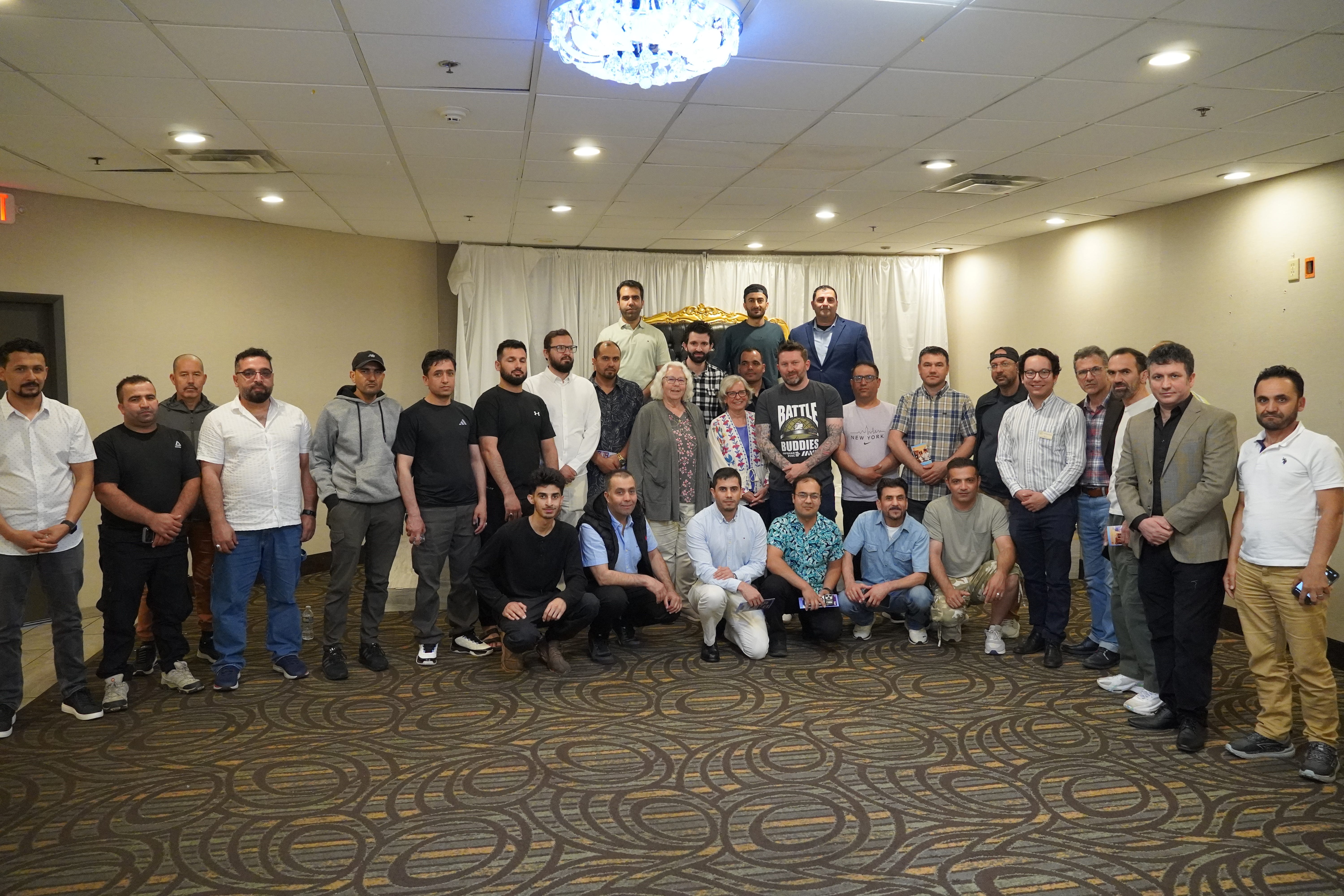
We also held an AfghanEvac town hall in Rochester over the weekend for the local Afghan community, and more than sixty people turned out. That number is the story. More than sixty of our Afghan neighbors came out wanting straight answers on the status and future of the pathways their families depend on, the SIV program, P-1 and P-2 referrals, family reunification, and the question of legal status here in the United States.
Austin Ponce, the Western New York Regional Assistant for Senator Kirsten Gillibrand, came to hear directly from Afghans about what they are facing, exactly the kind of presence that turns constituent stories into congressional attention. These are the people living inside every policy fight we cover, and showing up in person, in their community, is the least we can do.
The Keeping Our Promise Keynote
Over the weekend, I delivered the keynote at Keeping Our Promise’s Road to Resilience gala. The Rochester organization, led by Ellen Smith, has spent years getting Afghan and Iraqi allies to safety, and its volunteers were part of the team that helped secure the court win above.
The speech laid out where things stand, what the next stretch demands, and why this work cannot pause just because Washington has.
You can watch the full speech on our YouTube channel.
Keeping Our Promise, and a baby who almost did not make it
A few months ago, Keeping Our Promise was fighting to reunite an infant with his parents. The father had served the United States as a guard, and the family had earned their visas to come here. But the baby’s visa contained a single spelling error. Before it could be fixed, new entry restrictions slammed the door, and the child was suddenly blocked from the country his parents were cleared to enter. The parents faced an impossible choice. Stay in hiding in Afghanistan, where the father was hunted for his service, or leave for safety without their baby and pray someone could reunite them later. Their visas were expiring. The baby had none. With a regional conflict closing airspace and flights vanishing, the window was closing by the day.
They made the heartbreaking decision to travel ahead during a brief ceasefire, leaving their child behind. And for five months, Keeping Our Promise refused to let that be the end of the story. Petitions. Emails to the U.S. Embassy in Islamabad. Calls. Late nights and early mornings working every channel to secure the baby a corrected visa, physically move a passport across a border, and then get that baby out to safety.
It worked.
Baby Mahdi made it to Rochester.
It happened because a community decided that love is stronger than fear, and because a handful of people refused to give up on one child.
That is the work. Not abstraction, not policy in the aggregate, but one guard, one wife, one baby, and a promise someone insisted on keeping. When people ask what is actually at stake in the fights we cover every week, this is the answer.
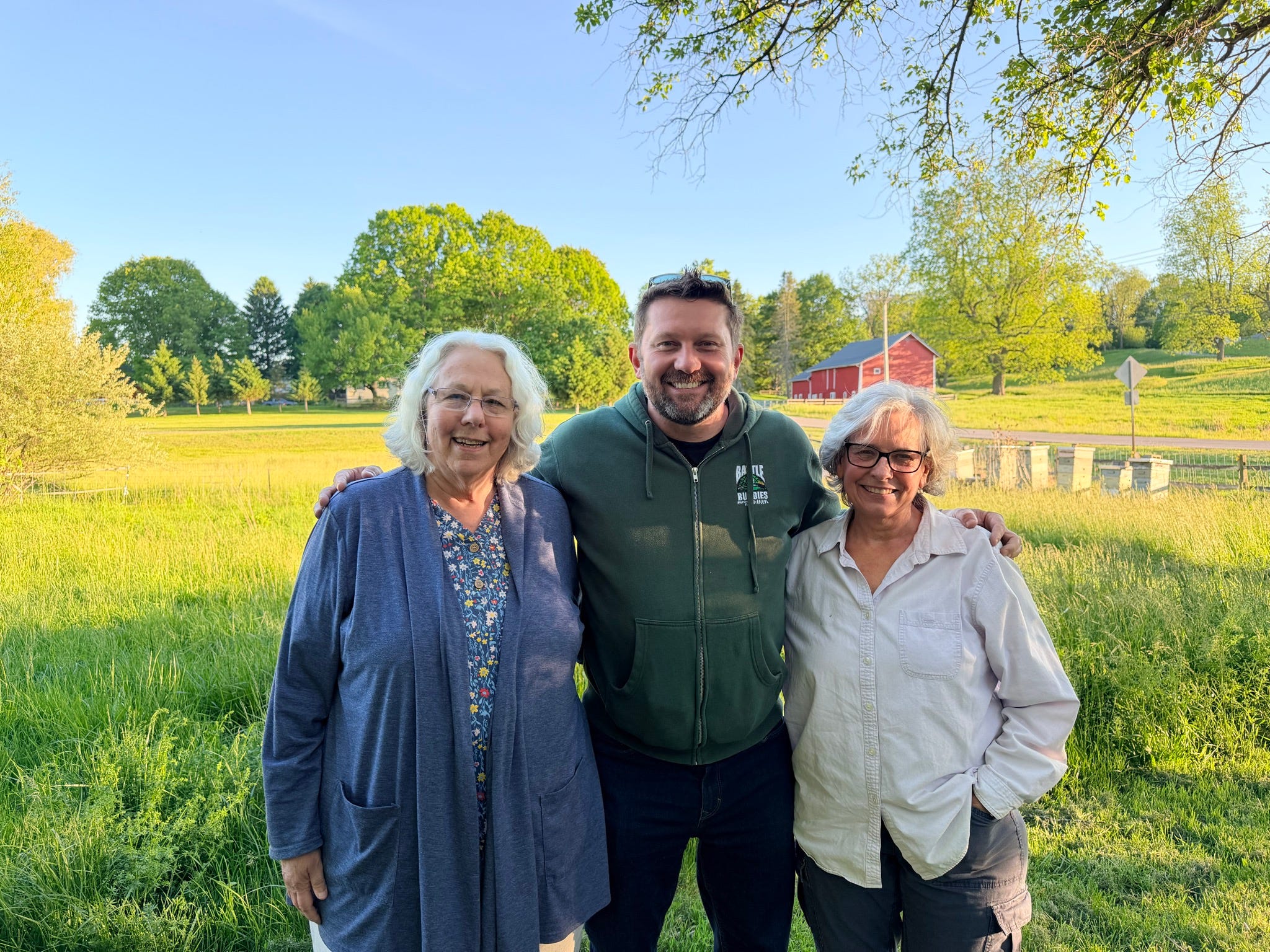
A personal word about Ellen and Judy
I want to step out of the organizational voice for a moment and speak for myself. The baby in that story is alive and with his parents because two women in Rochester decided that was going to happen and then made it true. Ellen and Judy have spent more than a decade doing this work, the late-night calls, the emails to embassies, the cases nobody else would touch, the families everyone else had written off. They do not do it for recognition, and they almost never get it.
What Ellen and Judy have built is generational. More than 2,000 allies and their families have been resettled in Rochester because of Keeping Our Promise, and the children who arrived terrified are now on honor rolls, the mothers once barred from school are earning degrees, and sixty-one families have bought homes and put down roots. That is not a program. That is a legacy, measured in human lives that will ripple forward for decades. Across the entire AfghanEvac community, there are people safe today who would not be if Ellen and Judy had decided this was too hard.
I got to spend real time with both of them this weekend, and I left more determined than I arrived. They are the best of what this coalition is. Thank you, Ellen. Thank you, Judy. We are honored to stand beside you.
Next stop, Texas
This week we head to Texas, and it is a full schedule. We will host two town halls, one in Fort Worth on June 3 and another in Dallas on June 4.
While we are there, we will meet with DFW-area resettlement affiliate partners, and we will sit down with the Afghan staff who work inside those agencies, the people doing the daily work of resettlement and who too often carry it without recognition.
If you are in Fort Worth or Dallas, we want to see you at a town hall. Reach out and we will get you the details.
And if you are anywhere else and want us to bring a town hall to your community, tell us at afghanevac.org/town-hall. We are building the next round of these now.
In the press
New Trump administration rule forces most immigrants seeking green cards to return to home countries first — Houston Public Media
Trump administration plan would allow for quick asylum rejections without interviews — CBS News
US veteran charged with ‘conspiracy’ over ICE protest refuses to plead guilty — The Guardian
Mike Needham promoted to top White House national security post — Axios
Rubio promotes top aide Mike Needham to role on National Security Council — The Washington Post
US draws up plans to halt immigration, customs processing at ‘sanctuary city’ airports — Reuters
Exclusive: Brussels to host Taliban in talks on Afghan deportations — Euractiv
Russia and Taliban sign military agreement — The Independent
Rochester’s Road to Resilience gala supports Afghan allies — Rochester First
Shawn VanDiver on Camp As Sayliyah Future, Legal Updates — The Afghanistan Project Ep. 143
For nearly five years, we have shown up for our mission partners.
Since the day this administration took over, they have hidden behind a nebulous “Afghanistan policy review” while quietly dismantling everything built to support those same allies.
One side keeps showing up. The other will not even say plainly what it has done.
This week is an opportunity for accountability. The only open question is whether Congress takes it.
That is why every reader has to act, and has to ask their friends to act too. Ask the questions. Sign the letter. Then send this to someone and tell them to do the same.