


Conflict between Afghanistan and Pakistan is escalating. U.S. and Israeli strikes inside Iran have triggered retaliatory activity across the region, including attacks on U.S. interests and allied countries. The security environment across the Middle East is growing more volatile by the day.
That volatility is not abstract for our Afghan friends.
At Camp As Sayliyah in Doha, where more than 1,100 Afghan allies and family members remain under U.S. authority, residents have recorded missile intercepts overhead. Debris from those intercepts has penetrated civilian housing units. Approximately 800 of the residents are fully vetted, approved refugees who were cleared for travel to the United States. More than half are women. More than half are children. Roughly 150 are immediate family members of active duty U.S. military personnel. Families have sent photographs and video showing fragments inside living quarters where children and parents reside.
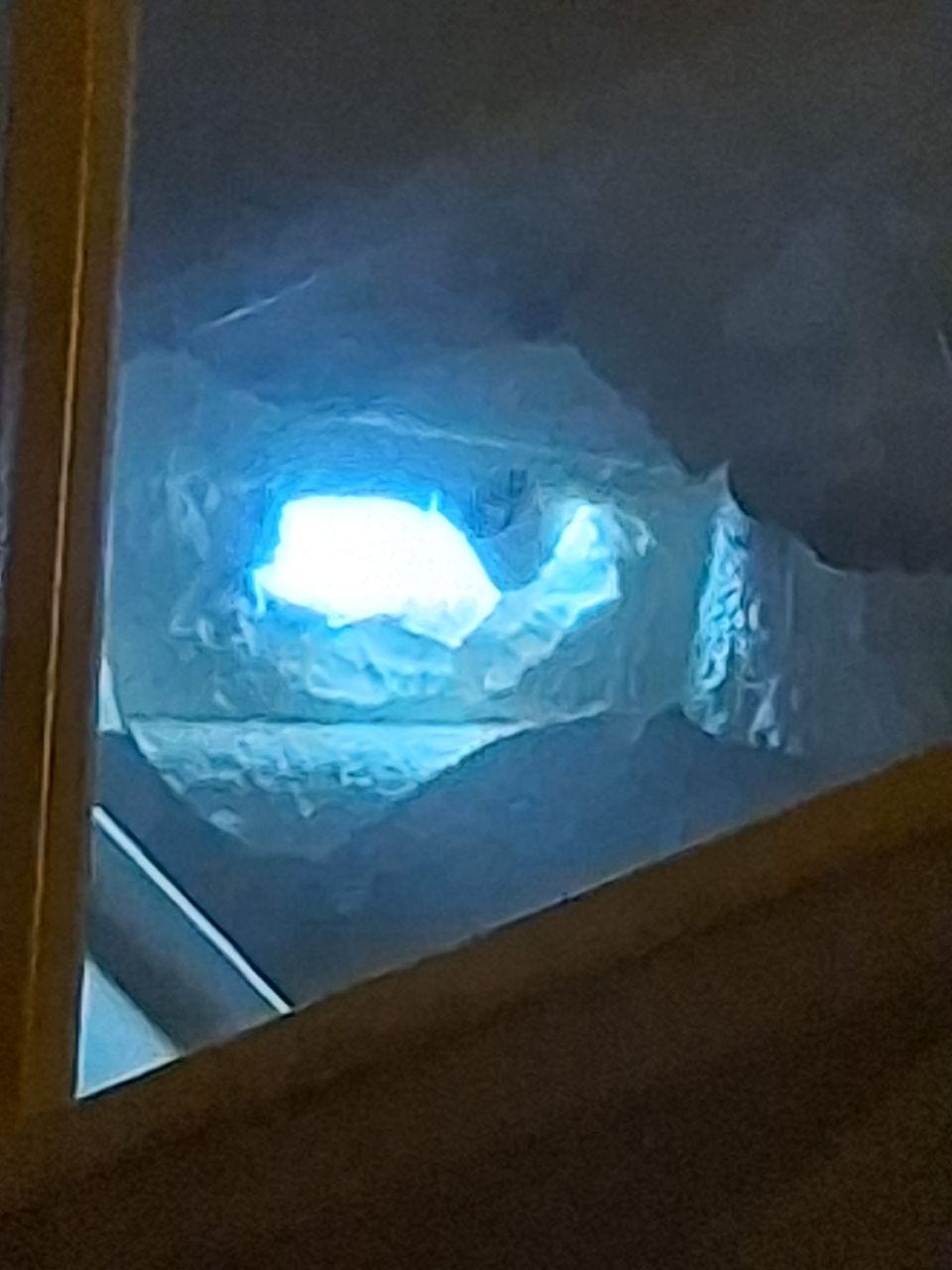
We have no indication the camp itself has been deliberately targeted, and no confirmed reports of physical injury.
Debris is falling from the sky because regional conflict is expanding, and vulnerable civilians are living beneath it.
At the same time, courts are weighing whether refugees can be detained after lawful admission, veterans are being cited for standing in immigration court hallways, and federal agencies are advancing rule changes that could delay work authorization and narrow appellate review.
As humanitarian priorities contract globally, domestic policy remains stalled for the most vulnerable, and conflict continues to displace millions. Multiple pressures are colliding at once. The consequences are immediate, personal, and measurable.
A message to our Afghan friends
For many of our Afghan friends and partners, this moment feels deeply destabilizing. Families already living in prolonged limbo between Afghanistan, Iran, Pakistan, and third countries are watching new conflicts unfold around them, knowing they have no control over the forces shaping their future. Many have told us they feel unmoored, as if larger geopolitical struggles are once again gambling away the fate of ordinary people. The uncertainty is exhausting, and the sense of powerlessness is real.
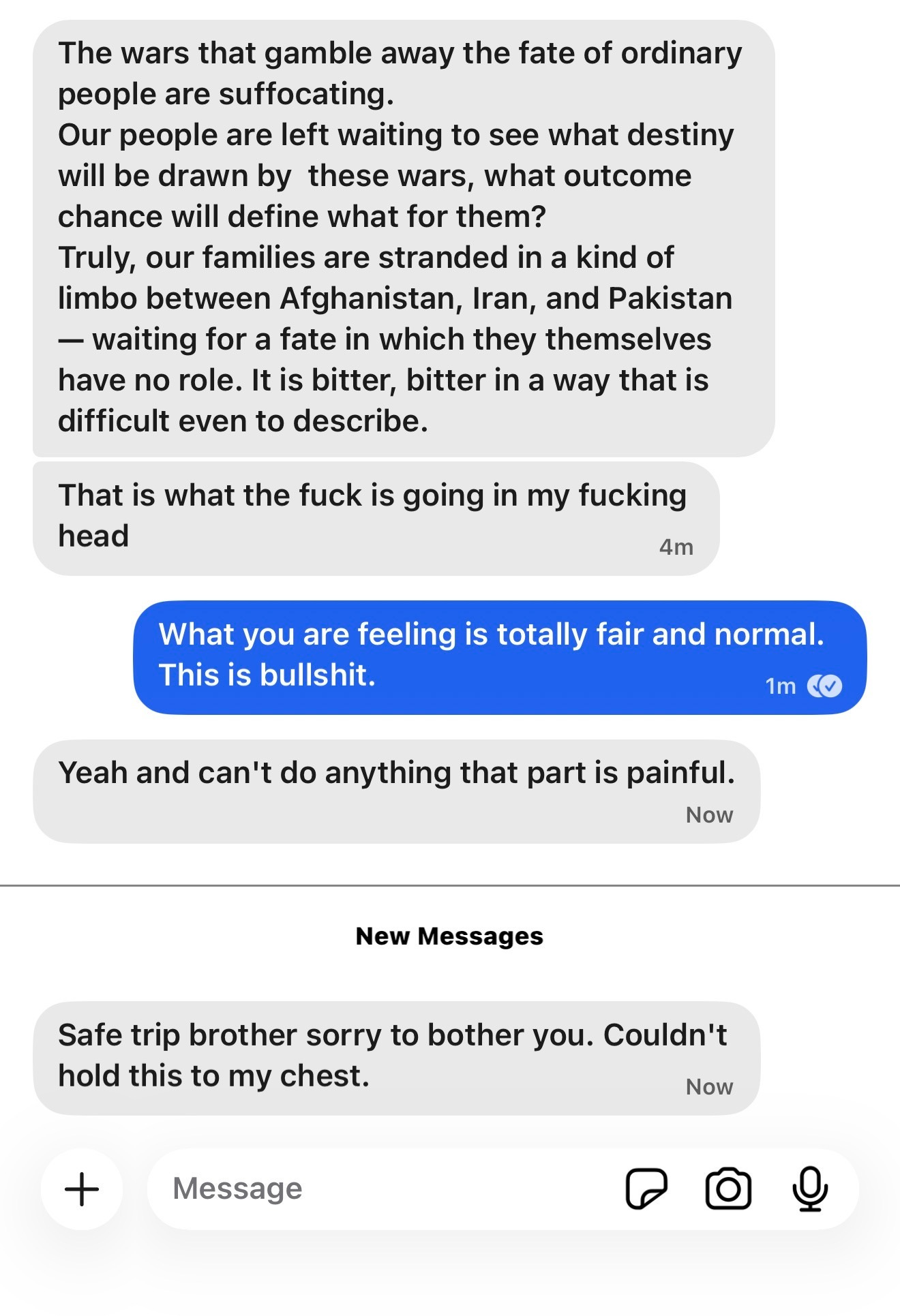
What we can say clearly is this: you are not forgotten, you are not invisible, and the work to secure lawful pathways and durable solutions continues, even in difficult moments like this.
Take Action
Share this update on your social media
Camp As Sayliyah
More than 1,100 Afghan allies and family members remain at Camp As Sayliyah in Doha under U.S. authority. Approximately 800 are fully vetted, approved refugees who were cleared for travel to the United States. More than half are women. More than half are children. In recent days, residents have recorded missile intercepts overhead, and debris from intercepted strikes has entered civilian housing units. Families have sent photos and video showing fragments inside rooms where children sleep. These families do not have hardened shelter comparable to that used by U.S. personnel in the region.
For Afghans who survived the fall of Kabul and Taliban retaliation, this is re-traumatizing. They followed our process. They completed vetting. They have been trapped in transit since January 2025. Now they are watching active military activity unfold above their living quarters. Approved refugees should not be living under missile debris while waiting on policy decisions.
State has informed residents they must permanently relocate to a third country by March 31, with Malaysia the only country confirmed to have committed to accepting some but not all thus far (according to sources within State Department).
These individuals were vetted and cleared for entry to the United States. Relocating them elsewhere does not discharge the duty of care assumed when the United States moved them into U.S.-managed transit.
We have formally pressed senior State Department leadership to provide hardened protective measures, communicate clear contingency plans, and expedite direct relocation to the United States.
Direct Message to CAS Residents
Over the weekend, we issued a direct message to residents in English, Dari, and Pashto. We made clear that we have no reason to believe Camp As Sayliyah itself has been deliberately targeted, and that residents should remain inside buildings to reduce risk. At the same time, we told families plainly that we are pushing State Department officials to take additional steps to protect them and their children.
We are including that message below because transparency matters. When families are living through visible military activity, they deserve clarity, calm communication, and visible advocacy. They deserve to know they are not alone.


BIA filing
A new federal lawsuit challenges recent changes to Board of Immigration Appeals procedures that were implemented through an Interim Final Rule without the standard public notice-and-comment process. The rule restructures how immigration appeals are reviewed by expanding the use of single-member decisions, limiting full panel review, restricting certain procedural tools, and accelerating case processing in ways plaintiffs argue undermine fairness and due process. AfghanEvac member organization HIAS is a plaintiff in the case, joining other legal and advocacy groups in arguing that the rule was unlawfully issued and will harm vulnerable immigrants navigating the appeals process.
Why It Matters
For Afghan allies and other immigrants, the Board of Immigration Appeals is often the last meaningful opportunity to correct legal errors before a deportation becomes final. Weakening safeguards at this stage increases the risk of wrongful removal, prolonged family separation, and irreversible harm. When appellate review is narrowed or rushed, mistakes are more likely to stand. This case is about more than procedure. It is about whether due process and fairness remain foundational principles in the U.S. immigration system.
Preliminary Injunction in Minnesota
A federal judge in Minnesota has temporarily stopped the U.S. government from arresting or detaining refugees simply because they have passed the one-year mark in the United States and are still waiting for their green cards. The government had argued that once a refugee reaches one year after lawful admission, officials can detain them if their permanent residency has not yet been approved. The court rejected that reading of the law, saying Congress did not authorize this type of detention and that the new policy breaks with decades of consistent practice. In short, the judge found that refugees who followed the legal process should not face detention just because the government has not finished processing their paperwork.
This ruling currently applies only in Minnesota and is not yet nationwide, but it carries wider importance. Other courts may rely on its reasoning, especially if similar cases are filed in states like California or elsewhere in the Ninth Circuit. If higher courts review the issue, the decision could eventually affect the entire country. For Afghans admitted through the U.S. refugee program, this case sends a clear message: American courts are carefully examining efforts to expand detention authority over lawfully admitted refugees, and at least for now, there are legal limits on how far the government can go.
Volunteers Cited for Loitering
Last week in San Diego, two U.S. military veterans were cited at a federal building while peacefully accompanying immigrants to immigration court. One of the veterans is a longtime AfghanEvac volunteer and serves as one of our Battle Buddies, a program in which veterans stand alongside Afghan wartime allies as they navigate complex legal proceedings. The two were standing in a public hallway outside the ICE check-in area and were not disrupting proceedings or blocking access. Federal officers told them the enforcement action stemmed from a decision by the Department of Homeland Security, in coordination with the General Services Administration, and described it as part of a nationwide directive. The citation was issued under a federal property regulation typically used for building rules.
If federal authorities are now using property regulations to limit public presence around immigration court proceedings, this raises serious concerns about transparency and due process. Immigration courts in the United States have historically been open to public observation as a safeguard of fairness and accountability. Veterans who once served alongside Afghan allies are continuing to stand with them in court so they do not face the system alone. We have formally asked DHS and GSA to clarify whether a nationwide policy restricting public access has been issued and to release any written directive supporting such a change.
Why This Matters
In the United States, immigration court proceedings are generally open to public observation. Public access is an important safeguard that promotes fairness, transparency, and accountability. When members of the public, including veterans, observe proceedings, it helps ensure that individuals navigating the system are treated lawfully and with dignity.
Afghan allies often face complicated legal processes, language barriers, and prolonged uncertainty. The presence of trusted volunteers can provide reassurance and an added layer of transparency. If public access to these spaces is restricted, even indirectly through building regulations, it can have real consequences for due process and public confidence in the system.
Refugee in Buffalo found dead after detention by DHS
Nurul Amin Shah Alam, a 56-year-old Rohingya refugee who was nearly blind and spoke no English, died in Buffalo after U.S. Border Patrol released him at night outside a closed coffee shop miles from his home. DHS publicly claimed agents dropped him at a “warm, safe location” near his residence. Surveillance footage later showed that was false. Video captured a Border Patrol van leaving him at a locked Tim Hortons in freezing conditions, with no phone, no money, and no way to reach his family. His body was found days later.
Why It Matters
This is what happens when systems treat vulnerable refugees as paperwork instead of people. For Afghans and others rebuilding their lives here, safe release, coordination with families, and basic accountability are not administrative details. They are life-or-death safeguards. When agencies misrepresent facts and fail to ensure humane treatment, trust collapses, and lives are put at risk. That is exactly why our work matters.
EAD Rule Change Update
The U.S. Department of Homeland Security has proposed a significant change to how Employment Authorization Documents, or work permits, are issued for people seeking asylum. The proposal would extend the waiting period before someone can apply for a work permit from 180 days to 365 days, lengthen processing times, and allow the government to pause new asylum-based work permit applications entirely when asylum case backlogs exceed a set threshold, which they currently do. The rule would also expand the grounds that make someone ineligible for work authorization. If implemented, many individuals with pending asylum cases, including some Afghan allies, could face prolonged periods without the legal ability to work.
Why This Matters
Work authorization is the foundation of self-sufficiency. It allows Afghan allies and other asylum seekers to support their families, pay rent, buy food, and contribute to their communities. Delaying or denying access to work increases hardship, prolongs instability, and shifts additional burden onto already strained nonprofit and community networks. For Afghans who have already endured years of uncertainty, adding new barriers to lawful employment undermines both integration and dignity.
What You Can Do
This proposed rule is open for public comment before it is finalized. Public input matters. You can submit a formal comment through the Federal Register at the link below and explain how delaying or restricting work authorization would affect Afghan allies, your community, or your organization.
Global Update Recap
Last week we brought together nearly 1,900 participants from 31 countries and 48 U.S. states for our February Global Update. More than 1,000 Afghans with active cases joined from Afghanistan, Pakistan, and Qatar, alongside veterans, immigration attorneys, refugee leaders, journalists, advocates, and representatives from 49 congressional offices. We covered the current status of Special Immigrant Visas, changes to the refugee program, proposed work authorization rules, ongoing litigation, and what we are seeing across multiple countries. We also announced that former UK Cabinet Minister Johnny Mercer has joined AfghanEvac as a Senior Advisor, reinforcing that this is not just an American responsibility, but a shared commitment among allied nations.
Why This Matters
The size and diversity of this briefing make one thing clear: the obligation to Afghan allies is global, and the work is not over. Johnny Mercer’s decision to formally join AfghanEvac underscores that this effort crosses borders and political ideologies. When leaders from different countries and different political traditions align around keeping promises made in war, it strengthens credibility and momentum. As policies shift and uncertainty grows, coordination and clear information matter more than ever. When veterans, lawmakers, advocates, and Afghan families are aligned around the same facts, we are stronger and better positioned to push for lawful, durable solutions.
International Engagement
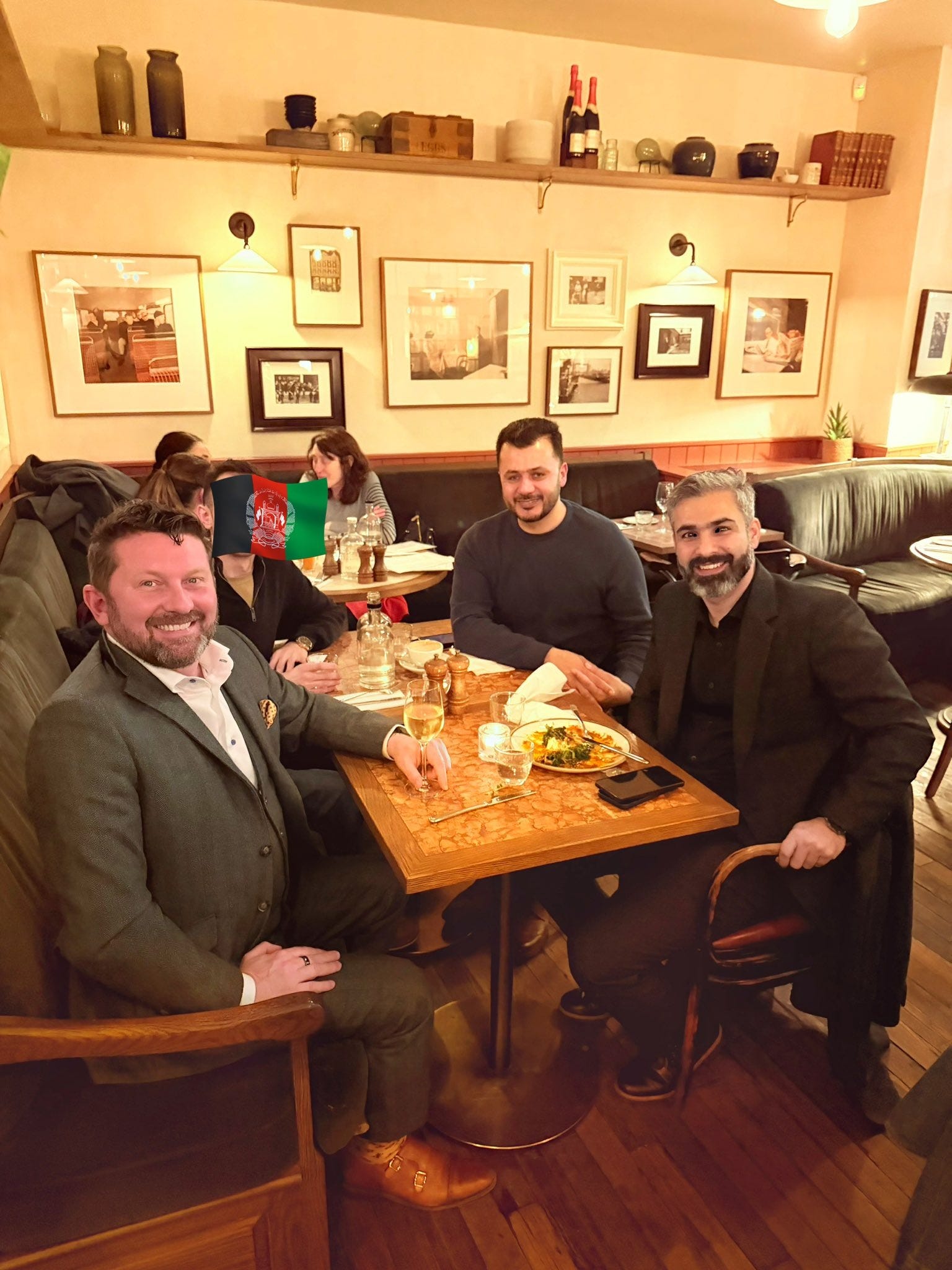
This week I traveled to London, where I met with NGOs, Afghan community leaders, and international partners, and participated in the Humanitarian Finance Summit. The conversations were sobering. With the United States ending USAID programs and major global partners contracting their humanitarian operations, the impact on vulnerable populations is immediate and severe. Organizations that once provided critical services are scaling back or shutting down entirely, leaving gaps in food assistance, medical care, legal aid, and relocation support. The global humanitarian system is under significant strain, and Afghan families, particularly those still in the region, are feeling the consequences in real time.
Why This Matters
Humanitarian funding is not abstract. When major donors withdraw, instability grows, displacement increases, and lawful relocation pathways become harder to sustain. For Afghan allies still in Afghanistan or in third countries, reduced aid means fewer services, longer waits, and greater vulnerability to exploitation and forced return. Globally, shrinking humanitarian capacity also weakens democratic credibility and cedes influence to actors who do not share our values. The consequences are strategic, not just moral.
Press
They Fought for the C.I.A. in Afghanistan. In America, They’re Living in Fear – NY Times
The Trump administration is detaining and questioning refugees already admitted to the US – Associated Press
Shah Alam’s family speaks of their loss – Investigative Post
Nurul Amin Shah Alam, Blind Rohingya Refugee Dumped by Border Patrol, Dies in Cold – Mother Jones
Blind refugee found dead in New York after being released by immigration authorities – BBC
We are in a period of convergence. Regional instability is rising. Domestic immigration policy is tightening. Humanitarian funding is contracting.
When these forces collide, vulnerable families absorb the shock first.
Missile debris entering civilian housing at a U.S.-managed transit camp is not an abstraction. It is a test of whether duty of care still means something. Court rulings narrowing due process are not technical disputes. They shape whether lawful pathways remain real. Delayed work authorization is not administrative delay. It determines whether families can survive.
Our responsibility does not shift with the policy climate or who sits behind the Resolute desk.
Lawful pathways, durable solutions, and due process are most essential when pressure rises.
We will continue pressing at every level of government. We will continue coordinating internationally. We will continue standing visibly beside Afghan families navigating this uncertainty.
This is a serious moment.
And we are not stepping back.
Hello Sir ,
Once again, I would like to express my deep gratitude for your tireless efforts in supporting Afghan colleagues.
I would like to respectfully offer aSincerely yours
If your respected organization — or through your coordination with the United States Department of State — could engage in discussions with the Government of Malaysia to facilitate visa issuance for me, my family, and other SIV applicants currently residing in Pakistan, it would represent an extraordinary and life-saving form of support during this period of uncertainty and instability.
We would be sincerely grateful for any assistance or consideration in this regard.
Ghulam Murtaza Aieen
An Afghan SIV Applicant
Current location , Islamabad , Pakistan