


This week the voices of Afghan families at Camp As Sayliyah broke through into the national conversation. A young Afghan woman currently living at the camp spoke on CNN with Jake Tapper, describing what it is like for families to watch missile intercepts overhead while waiting for permission to travel to the United States.
At the same time, USA Today published a major story detailing the deteriorating conditions facing Afghan allies stranded at the facility. These stories are important because they center the voices of the people most affected by policy decisions and regional conflict.
In this week’s update we share the latest from Camp As Sayliyah, including the growing security risks for families there. We also cover the rapidly escalating Iran conflict and what it means for Afghan evacuees in the region, rising tensions between Afghanistan and Pakistan, new legal developments affecting refugee admissions and immigration policy, reflections following International Women’s Day on the role Afghan women and women across the coalition continue to play in this work, and a Sacramento visit.
But first, your weekly action items
Contact your representative to let them know about the awful situation at Camp As Sayliyah
For Afghans: Participate in our Global Roll Call so we can get together when we travel to your region
For Afghans and Advocates: Let us know if you want to do media / press
Camp As Sayliyah update
Regional conflict is now directly affecting Afghan evacuees at Camp As Sayliyah (CAS) in Doha. Residents have recorded missile intercepts overhead as air defenses respond to attacks across the Gulf. Debris from those interceptions has fallen into the camp, including fragments that have penetrated civilian housing units where Afghan families are living. More than 1,100 Afghan allies and family members remain at CAS under U.S. authority. Approximately 800 are fully vetted refugees who had already been cleared to travel to the United States before relocation programs stalled.
More than half of the residents are women, more than half are children, and roughly 150 are immediate family members of active duty U.S. service members. Families have shared photos and video showing debris inside rooms where children sleep. While there are no confirmed injuries and no indication the camp itself has been deliberately targeted, the reality is clear: Afghan allies are living beneath active missile interceptions while waiting for policy decisions about their future.
Why this matters
Afghan allies who completed U.S. vetting and were approved for travel should not be living under falling missile debris while being abandoned by the United States of America in the face of no clear relocation plan.
Camp As Sayliyah residents do not have the hardened shelter protections used by U.S. military personnel in the region.
The State Department has slated the camp for closure by March 31 and informed residents that relocation is imminent but has not provided details.
These details are necessary to prevent further retraumatization and allow families to plan their lives after giving so much in support of American missions.
AfghanEvac sent a formal letter to Secretary Rubio urging immediate protective measures, clear contingency planning, and expedited relocation to the United States.
The core issue is simple: these families followed the process, passed security screening, and were placed in U.S.-managed transit. The United States retains a duty of care while they remain there.
Beth Bailey covered the issue on the Afghanistan Project Podcast this week.
Our engagement on Camp As Sayliyah
For more than a year, AfghanEvac and coalition partners have raised concerns about Camp As Sayliyah through private channels. That work has included texts, emails, letters, and direct engagement with senior officials across the U.S. government. When those efforts failed to produce urgency, we elevated the issue to Congress and began engaging more publicly.
Last week Senator Chris Coons asked Secretary Kristi Noem about the Afghans at Camp As Sayliyah during a Senate Judiciary Committee hearing. The question was not answered and now Secretary Noem has been moved to a different role. Congressional oversight like this matters. It ensures that the situation facing these families cannot be quietly ignored.
What this advocacy has included
Private texts, emails, and letters to senior U.S. officials
Direct outreach to congressional offices when agencies did not respond
A formal letter to Secretary Rubio urging protective measures and relocation planning
Supporting residents who asked for help bringing attention to their situation
For years we worked these issues quietly because we were seeing progress. That changed when engagement slowed and movement stopped. When private channels fail, public awareness becomes one of the few tools left to prompt action.
We also want to address something residents have been told directly. Some camp staff have warned that speaking publicly could put families at risk. We have confirmed through multiple channels that responsible advocacy is not placing residents in additional danger. In fact, the attention generated by residents speaking out and media coverage is reaching decision makers and helping drive engagement.
Finally, we want to thank the government and people of Qatar. Qatar has shown extraordinary generosity in hosting Afghan evacuees and supporting relocation operations for years. Even as the region faces missile threats and rising tensions, the Qataris have continued to provide safety and support for the families at Camp As Sayliyah.
Our goal remains simple: protect these families and move them to durable solutions as quickly as possible.
We expect additional media attention and advocacy in the coming days as more allies share their experiences.
Regional Impacts: US-Israel-Iran War
The conflict between the United States, Israel, and Iran has escalated sharply over the past week. U.S. and Israeli forces have carried out extensive airstrikes on Iranian military targets, while Iran has responded with drones and missile attacks against U.S. bases and Gulf partners. The fighting has spread across the region, including strikes in Lebanon and repeated interceptions of missiles and drones by Gulf states. The United States says it is moving toward controlling Iranian airspace, while Iran has shown no indication it plans to surrender or enter negotiations. The growing conflict is also creating risks for civilians and displaced populations across the region, including Afghan evacuees who remain in third countries while awaiting resettlement.
Why this matters
The war is unfolding in parts of the Middle East where large numbers of vulnerable populations are located, including Afghans waiting for relocation to the United States.
One of the largest groups of Afghans awaiting onward movement is located at Camp As Sayliyah in Qatar, placing them close to a region experiencing increased military activity and missile threats.
The longer the conflict continues, the greater the risk to humanitarian operations across the region, increasing the likelihood of both emergency and protracted refugee crises.
For Afghan allies already in limbo after years of displacement, the conflict adds another layer of uncertainty and potential danger while they still have limited freedom of movement.
Afghanistan–Pakistan conflict update
Tensions between Pakistan and the Taliban government in Afghanistan are escalating into what Pakistani officials are calling “open war.” Over the past week, Pakistan has carried out more than 50 airstrikes on targets inside Afghanistan, including a recent strike on Bagram Air Base, the former hub of the U.S. war in Afghanistan.
Satellite imagery indicates several buildings at the base, including warehouses and a hangar, were destroyed. Pakistan says the campaign is aimed at militant groups it accuses the Taliban of harboring, particularly the Pakistani Taliban (TTP), which Islamabad blames for attacks that have killed hundreds of Pakistani security personnel. Taliban officials deny supporting those groups but have acknowledged the strikes and warned that Afghanistan will defend itself if attacks continue.
Why this matters
A widening conflict between Afghanistan and Pakistan risks destabilizing the region just as many Afghan allies are still trying to relocate or reunite with family members.
Fighting and cross-border strikes make it harder for Afghans to safely leave the country or move through the region while pursuing legal immigration pathways.
Escalating tensions also increase pressure on neighboring countries that currently host large numbers of Afghan refugees and applicants in transit.
For Afghan allies who supported U.S. missions and are still waiting for relocation or family reunification, regional instability adds yet another layer of uncertainty to an already fragile process.
Pacito v. Trump update
The Ninth Circuit issued a decision in Pacito v. Trump, a major lawsuit challenging the administration’s suspension of the U.S. Refugee Admissions Program (USRAP). The court allowed much of the administration’s policy to stand, meaning the government can continue pausing refugee admissions and refugee case processing while the case moves forward. However, the court also upheld part of the lower court’s order requiring the government to continue providing certain legally required services to refugees who are already in the United States.
Why this matters
The decision reinforces that the administration likely has broad authority to pause refugee admissions.
At the same time, courts are signaling that the government still has legal obligations to refugees who have already been admitted.
For thousands of refugees waiting overseas, including many Afghan allies, the ruling means the refugee pipeline largely remains frozen while the legal fight continues.
New Lawsuit filed
A broad coalition of immigrant service organizations and labor unions has filed a federal lawsuit challenging several Trump–Vance administration immigration policies they argue discriminate against people based on their country of origin. The policies include a halt to many asylum adjudications, a freeze on immigration benefit applications for individuals from countries covered by the administration’s travel ban, and new guidance allowing immigration officials to weigh nationality when making certain immigration decisions. The lawsuit argues these steps violate federal law and the Constitution by blocking people from accessing legal immigration pathways based largely on where they are from.
Why it matters
If these policies remain in place, they could fundamentally change how the U.S. immigration system operates by allowing nationality to influence immigration decisions and by freezing many legal cases already in progress. Advocates warn the changes could separate families, shut down humanitarian protections, and create new barriers for people trying to follow lawful immigration processes. The case is likely to become an important legal test of how far the administration can go in reshaping immigration policy through executive action.
International Women’s Day reflection
International Women’s Day was observed around the world this weekend, but for many Afghan women the day arrived under some of the harshest restrictions anywhere on earth. Women and girls in Afghanistan remain barred from secondary education and university, restricted from many forms of employment, and increasingly pushed out of public life. These policies have not only erased opportunities, they have attempted to erase visibility and voice. At the same time, Afghan women inside and outside the country continue to organize, advocate, and lead. Many of the most determined voices pushing for lawful pathways, family reunification, and protection for Afghan allies are Afghan women who refuse to allow their communities to disappear into silence.
Why this matters
Afghan women are not just victims of repression. They are leaders, organizers, and advocates shaping the future of their communities.
Many Afghan women in the evacuation and resettlement pipeline supported U.S. and coalition missions, worked in civil society, or led local initiatives that advanced democracy and human rights.
Women across the AfghanEvac coalition, including veterans, lawyers, organizers, caseworkers, and volunteers, have been central to the effort to relocate Afghan allies and sustain momentum over the past four years.
Progress in this work has always depended on women who refused to accept that the story was over. Afghan women fighting for their rights, and women across the coalition fighting alongside them, remain essential to ensuring that promises made during the war are not abandoned in its aftermath.
Sacramento visit
On Sunday we traveled to Sacramento to spend time with members of the Afghan community who are directly affected by many of the issues discussed in this update. We met with families whose loved ones remain stuck at Camp As Sayliyah, as well as former Afghan Air Force pilots who served alongside U.S. forces and are still waiting for family reunification after years of separation. These conversations are a powerful reminder that the policies we discuss in Washington have real consequences for families across the United States who are still trying to bring their relatives to safety.
The visit also included an Iftar organized by an extraordinary Afghan woman who has become a powerhouse leader in the Sacramento community. Khatima Jafar has built networks of support for newly arrived Afghan families while continuing to advocate for those still waiting to reunite with loved ones.
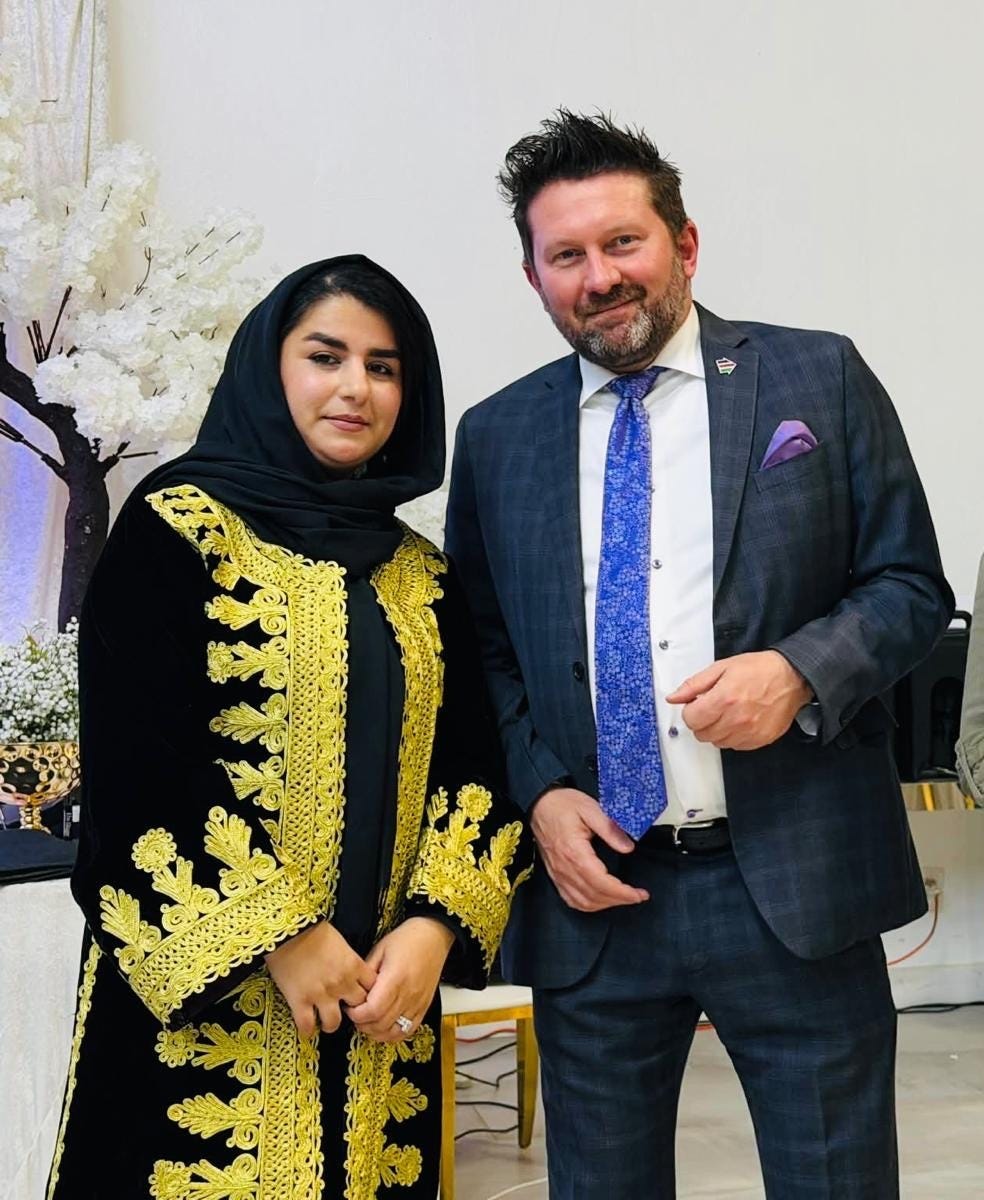
The evening brought together Afghan families to break fast during Ramadan, reflect on the journey that brought so many to California, and recommit to the work of ensuring Afghan allies and their families are not forgotten.
Press
Afghan allies, stranded at Qatar refugee camp, face ‘hell’ amid Iran war – USA Today
‘How many American troops should die for this?’: veterans split on war with Iran — The Guardian
Pakistan Strikes Bagram Air Base, Escalating ‘Open War’ With Taliban – New York Times
Iran war taxes US diplomatic work and leaves Americans in the Mideast in limbo – Associated Press
Shawn VanDiver on Afghans at CAS during Iran conflict, etc — The Afghanistan Project Podcast
Opinion: War with Iran should not begin with Americans left behind – San Diego Union Tribune
Britain to bar study visas for four nations, halt Afghan work visas — Reuters
Across these developments one theme remains constant. Afghan allies and their families continue to live with uncertainty created by policy delays, regional conflict, and a global humanitarian system under strain. Yet their voices are being heard, and the community advocating for them continues to grow stronger. From veterans standing up in immigration courts, to Afghan women leading advocacy efforts, to journalists amplifying the realities on the ground, the commitment to keeping promises has not disappeared.
As always, we will continue pushing for practical solutions, lawful pathways, and the safe relocation of the Afghan allies who stood with the United States. Thank you to everyone in this community who continues to speak up, show up, and move this work forward.
Hello Sir
I am sincerely grateful for your consistent updates and unwavering support for Afghan allies, and I wish you continued health and happiness always.