

The State Department had its best month of Afghan Special Immigrant Visa (SIV) decisions since a federal judge ordered it to improve. It still came in at less than half of what the court asked for, and a decision is not a visa.
In the same week, ICE was told to arrest a thousand more people a day, an enforcement surge started in our own backyard in San Diego, and government records showed exactly how many Afghan refugees are in the crosshairs of a “re-vetting” program built to put them back in detention.
Take the actions below, then read on.
TO EVERYONE WHO HAS GONE QUIET
This note is for the people and organizations who used to speak up vocally, aggressively, and / or often for Afghans and have stopped.
At this weekend’s event celebrating AfghanEvac’s work, I heard the same thing from Afghan after Afghan: they are disappointed that so many people who once stood with them have gone quiet. They noticed.
The time for quiet is over. If you are safe and you say you care about Afghans, it is time to say so publicly.
Silence has not protected a single family, stopped a single arrest, or brought a single ally home.
If you have the freedom to speak without putting yourself or your family at risk, use it.
If you work in the executive branch, or you are an Afghan without permanent status, protect yourself and your family first. We understand, and we are honored to continue speaking for you.
This is for everyone else, including organizations and people worried about making their friends in power sweat a little.
That discomfort is the point. That’s how change is made. That’s what we did with the Biden administration and how we helped build Enduring Welcome.
We can do hard things. Have the courage to do this one.
ACTION THIS WEEK
Write your member of Congress today. Ask your representative to commit to signing the Afghanistan TPS Act discharge petition the day it opens. It takes two minutes and anyone living in the United States can do it, citizen or not. If your member already cosponsors H.R. 9899, thank them and ask for the signature.
Sign up for the Hill day. The election will not change what Afghan allies face on November 4, and the discharge petition opens after it. Members sign when constituents show up in their offices. We are planning around the week of November 9.
Watch and share the Know Your Rights presentation. 300+ people signed up for Saturday’s attorney-led session. The English recording is now online, with Dari and Pashto versions on the way. Send it to every Afghan family you know, especially in Southern California this week.
Battle Buddies, log in to DISPATCH. Our new system for Battle Buddy deployments is live. Log in this week, confirm your details, and add anything we do not have yet. If you have not finished the Battle Buddy training, complete it there. That is where deployment requests will come from now on.
Fund the work at afghanevac.org/donate, or wear the ask to the Hill. None of what we do is government funded.
THE SINGLE MOST IMPORTANT THING THAT CAN HELP OUR ALLIES
The Afghanistan TPS Act of 2026, H.R. 9899, is the single most important piece of legislation for Afghan allies in the United States right now.
It would designate Afghanistan for Temporary Protected Status through July 1, 2029. That protects vetted allies already here from deportation to the Taliban and restores their right to work. Applicants would still go through biometric and national-security vetting, and DHS would have to decide within 90 days. It is a bridge, not a path to citizenship, and it is bipartisan from the first line: Reps. Crow, Bacon, Liccardo, and Salazar, two Democrats and two Republicans.
This morning, I launched a new AfghanEvac Action Center effort. It takes about two minutes to send a message to your representative. We need every single person reading this email to do it today, and then send the link to five people who will do the same.
Anyone living in the United States can take part, citizen or not.
SEPTEMBER: 1,214 DECISIONS. A BENCHMARK OF 3,000.
On October 7, the State Department filed its September report in Afghan and Iraqi Allies v. Rubio, the SIV class action before Judge Tanya Chutkan. State issued Chief of Mission (CoM) decisions on 1,214 first-time applications, reapplications, and appeals in September. The court’s benchmark for the month was 3,000.
That is the best month since the May 8 enforcement order, up from 916 in June, 811 in July, and 752 in August, and it is still well under half of what the court asked for. Allies still waiting at this step have been pending, on average, 666 days.
October’s benchmark is 4,000.
The staffing numbers explain why. State has said it needs 20 Foreign Service Officers on temporary assignment to clear this backlog. As of October 5, four had started.
Judge Chutkan has noticed. Her October 1 order requires a joint status report by October 25 explaining what State did to add officers from August through October, what it plans for November, and “why they have limited themselves to adding only twenty.”
That is a federal judge asking, in writing, why the government chose to staff a court-ordered program at a level it knew would fail.
And a decision is still not a visa. Chief of Mission approval moves an ally one step forward and then leaves them at a locked door, because Proclamation 10998, the travel ban that took effect January 1, still bars Afghan SIV applicants from receiving visas.
The government’s own progress report, filed September 22, lists zero visas issued to Afghan class members between June 4 and September 2. Legal aid organizations, including IRAP, still advise applicants to consider postponing interviews rather than risk a permanent denial under Section 212(f).
The pipeline is moving paper toward a wall the administration built.
We are not going to pretend 1,214 is a failure, because the people behind those decisions are real and some of them waited years. We are also not going to pretend it is compliance. The government argued last summer that missing the benchmarks “is not, in itself, noncompliance.”
The record now runs four months deep, and the answer is the same every time: not enough people, not enough urgency, and no visas at the end.
We are asking Congress to press State on two things before the October 25 filing. Fill all 20 officer slots now. And restore the SIV exception to the travel ban, because a program that approves allies and then refuses to let them travel is not a program. It is a holding pattern.
The D.C. Circuit hears the government’s appeal in this case on November 6.
Why it matters This case is the only enforceable deadline the SIV program has. Every month of the record is evidence, and the October 25 filing is the next chance to make the court, and Congress, see the choke point for what it is.
FAMILIES CAN COME HOME. THE FOURTH CIRCUIT SAID SO.
On October 1, the Fourth Circuit Court of Appeals refused the State Department’s request to pause the ruling in A.A. v. U.S. Department of State.
On July 29, the federal court in the Eastern District of Virginia vacated the government’s policy of applying the travel ban to the spouses and children of people granted asylum in the United States. It found that these follow-to-join family members are “clearly ‘seek[ing] asylum’” and fall outside the proclamations.
The plaintiffs are Afghan allies who won asylum here and filed I-730 petitions for families still in danger in Afghanistan. The appeals court also rejected the government’s argument that the visa decisions were beyond a court’s review.
The ruling stands while the appeal continues, which means I-730 cases can move, and they are moving.
According to IRAP, five of the plaintiffs have already brought their families to safety in the United States under the July order, and thousands of asylee reunification cases can now proceed. For covered follow-to-join asylee cases, the State Department cannot rely solely on the challenged travel-ban policy to deny travel documents while the court's order remains in force.
Why it matters For more than a year, Afghan asylees have been told their spouses and children were locked out by a proclamation. That is no longer true. If you are an Afghan asylee with an I-730 for your family, talk to your lawyer now about moving your case forward, and read IRAP’s case page.
THANK YOU, CENTREVILLE
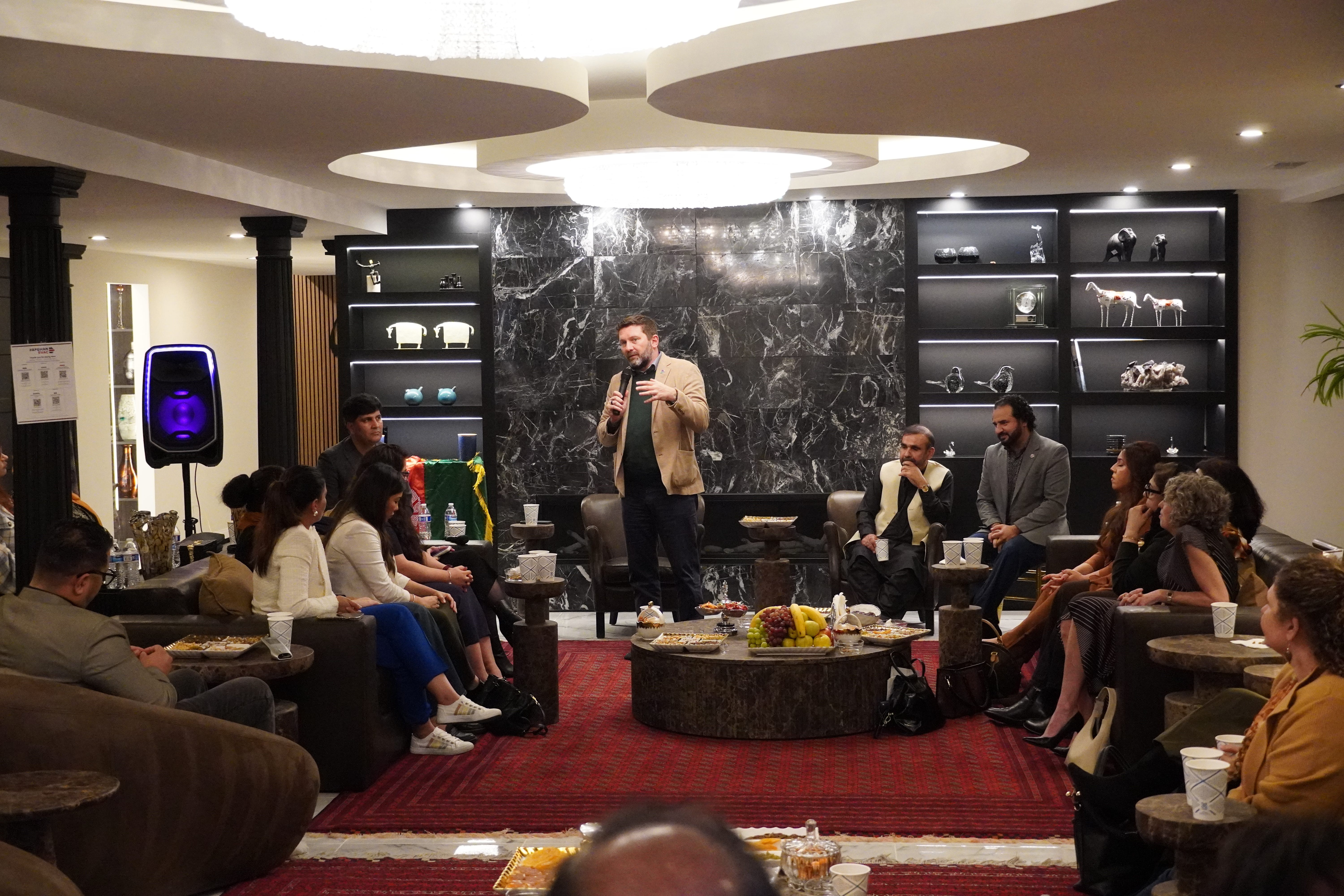
On Sunday, many from the Northern Virginia Afghan community gathered in Centreville, Virginia, for an evening honoring me and the work of AfghanEvac. Thank you to Dr. Tarakhail for hosting, to Samad Fazli, Sharifullah Sharafat, and Lima Anwari for planning every detail in less than a week, to Nilab Ibrahimi for serving as master of ceremonies, and to everyone who spoke and came. It meant more than we can say.
One guest, Mary Akrami, who helped establish the first shelter for women at risk in Afghanistan and has now been made a refugee twice, shared a reflection on her generation’s story.
One line stays with us. “What disappointed me most is the silence.”
She is right, and she is not alone. Every Afghan family who made it to safety got there because someone showed up. That is still the job.
Now is the time to show up, at the Hill day, in the courtroom with a Battle Buddy, and in your member’s inbox. Soon it will be time to speak out, loudly and publicly. If you are not at risk of being deported, we need you to do both.
SHOW UP AFTER NOVEMBER 3. NO MATTER WHAT.
Three weeks from today, the country votes. Whoever wins, thousands of Afghan allies will wake up on November 4 facing the same uncertainty: no restoration of Afghanistan's TPS designation, precarious work authorization, and the possibility of detention or removal despite their service to the United States.
The election does not change their situation. What we do in the weeks after it can.
We have heard every reason the Afghanistan TPS Act cannot pass, many of them from coalition partners who believe there is no way that this can pass, given the makeup of Congress today. We respect them and we think they are wrong. We CAN get this done and we have to try.
We also think the path is clearer than the conventional wisdom allows. Reps. Jason Crow and Sam Liccardo filed the special rule on October 1. Once it clears the Rules Committee clock, which the sponsors expect in the lame-duck session, the discharge petition opens. If 218 members sign quickly, the House votes.
If we secure 218 signatures and force a House vote, we have an opportunity to demonstrate that protecting Afghan allies commands support across party lines. A decisive House vote would give the Senate a powerful reason to act.
None of that happens on its own. Members sign discharge petitions when the people they represent are in their offices and in their inboxes. That means you, and it means everyone.
You do not need to be a citizen or a voter to write your member of Congress or sit in their office. Every person living in the United States can do this, including Afghan allies themselves, who are the most powerful voices in the room.
So here is the ask, in two parts. Today, write your representative at afghanevac.org/tps and ask them to commit to signing the discharge petition the day it opens.
In November, come to Washington. Pick a window at afghanevac.org/tps-hill-day: the week of November 9 is when we are likely to be out there.
We set up your meetings with your own representative and senators, prepare you with the ask and the facts, and host a happy hour for everyone who comes. You bring the story: the interpreter who saved your unit, the neighbor who lost her work permit, the family still waiting in Qatar.
We cannot cover travel or lodging yet. If that changes, you will hear it here first.
Why it matters The weeks after an election are when attention drifts and promises get quietly shelved. That is exactly when Afghan allies need us to be loudest. A discharge petition rewards the side that shows up.
“TERROR-PRONE NATIONS LIKE AFGHANISTAN”
That is how the U.S. government describes the country our allies fled. The phrase comes from USCIS’s own internal press guidance, dated January 9, 2026, which blames the prior administration for admitting “loosely vetted aliens, often from terror-prone nations like Afghanistan.”
It is one of hundreds of pages on Operation PARRIS that IRAP obtained through a Freedom of Information Act lawsuit and published on October 6.
PARRIS is the DHS program that “re-vetted” refugees in Minnesota and put 72 people on an ICE target sheet, including three Afghans and two teenage girls, ages 15 and 17.
The same guidance asks, “Will PARRIS expand beyond Minnesota?” The answer it gives is “Yes.” It says the first focus was refugees from travel-ban countries, and Afghanistan is one of them.
USCIS’s own data shows that 185,539 refugees nationwide had not yet adjusted to a green card. Afghans are the second-largest group, at 23,261, behind only the Democratic Republic of the Congo. California has 5,154 of them, Texas 2,527, Virginia 2,134, Washington 1,501, and New York 1,034.
The data counted 5,722 Afghans as more than a year past arrival, but refugee admissions stopped in January 2025. By our analysis, nearly all of the rest have since crossed that line, so the real number at risk is closer to 23,000.
The documents also show how the operation works:
Arrest first, vet later. On January 20, the USCIS Vetting Center wrote that it had pivoted from vetting cases first to interviewing people ICE had already detained, and it called PARRIS a “model” for future operations. One Pakistani family was moved to Houston and released five days later with approved green cards.
Termination by default. USCIS policy staff wrote that if a refugee misses the 30-day window to respond to a Notice of Intent to Terminate, USCIS can end their status without an interview and refer them to ICE. For families who move often, a stale mailing address can become a deportation case.
New questions. The interview checklist adds six criteria that appear nowhere in USCIS’s Policy Manual. One flags possible terrorism-related grounds of inadmissibility, which is the criterion most likely to catch former Afghan soldiers and anyone forced to pay the Taliban under duress.
It reaches beyond refugees. A January 7 memo shows USCIS also re-vetting recent green card and naturalization approvals in Minnesota.
Their own process broke down. By March, Chief Counsel was signing off on every interview, and the Vetting Center had stopped adjudicating green card applications and asked for formal training.
The most important document, the 27-page Minnesota Pilot Review from April 2, is almost entirely redacted. Its findings, risk assessment, and statistics are all withheld.
Congress should demand it in full, along with the number of Afghans who have received a Notice of Intent to Terminate or lost their status.
There is one piece of good news. On October 5, the Tenth Circuit ruled in Mukantagara v. Mullin that federal courts can review a USCIS finding that someone did not qualify as a refugee when they were admitted. That ruling applies directly in Colorado, Kansas, New Mexico, Oklahoma, Utah, and Wyoming.
Why it matters These are people the United States vetted overseas before they ever boarded a plane, and many should already hold green cards. The government stopped adjudicating them and is now treating that delay as grounds for suspicion. If you are an Afghan refugee without a green card, update your address with USCIS today, prepare with IRAP’s toolkit, and if you receive a Notice of Intent to Terminate, get a lawyer immediately and request a Battle Buddy.
MORE ARRESTS, ORDERED FROM THE TOP
On October 7, CNN reported that ICE leadership told officers to add 1,000 arrests a day, returning to a goal of 3,000 daily and 19,000 a week. ICE has recently averaged about 2,000 a day.
At the same time, a 45-day enforcement push called Operation Safe California began in San Diego and Los Angeles County, with more than 250 officers deployed to Southern California. One source told reporters that officers were told to “go after anybody.”
A quota does not distinguish between a person with a criminal record and an Afghan interpreter with a pending asylum case and a court date. That is the point of a quota.
Afghans are being detained across the country, and the families who write to us cannot understand why a man who served beside American soldiers is sitting in detention while his SIV paperwork waits on a desk in Washington.
Why it matters San Diego is home to one of the largest Afghan communities in the country. If you are in Southern California, know your rights, keep your documents with you, and do not go to an appointment alone. We will send a veteran with you.
THANK YOU, REP. CHU
On October 9, Rep. Judy Chu and 28 colleagues wrote to DHS Secretary Markwayne Mullin, Attorney General Blanche, and the acting director of the Executive Office for Immigration Review (EOIR) demanding answers on why people cannot get out of immigration detention.
Their numbers are stark. Bond requests rose about 130 percent, from 34,845 in 2024 to 80,130 in 2025. Bond denials climbed from about 36 percent to 55 percent in the first three months of 2026. At Adelanto in California, 57 percent of bond requests have been denied since November 2025.
AfghanEvac is proud to have endorsed the letter.
Why it matters Detention without a realistic path to release is how the system pressures people into giving up valid claims. Members of Congress are now asking about it on the record.
KNOW YOUR RIGHTS, NOW ON VIDEO
On Saturday, over 300 people signed up for our free, attorney-led Know Your Rights training, with live interpretation in Dari and Pashto.
Thank you to Arwa Zakir Kakavand, Spojmie Nasiri, Sweeta Azimi, and Laila Ayub of Project ANAR for presenting, and to our partners at the Afghan-American Community Organization, the South Asian Bar Association of San Diego, California Immigration Project, Afghan Refugee Empowerment Fund, Project ANAR, and Nowruz Media.
The English recording is up and the Dari and Pashto versions are on the way.
LAWYERS, STAY TUNED
Saturday’s Know Your Rights training was the first public step for something bigger. AfghanEvac Counsel Corps is coming, and I will have a big announcement soon.
If you are an attorney, paralegal, or law student and you want to stand with Afghan allies, let us know what you’re curious about.
AfghanEvac is not a law firm and does not give legal advice. Talk to a qualified immigration attorney about your own case.
THE PUBLIC IS WITH US
New polling released October 7 by Data for Progress, the Refugee Advocacy Lab, and Refugees International found that 67 percent of likely voters want the United States to have a refugee program, including 55 percent of Republicans. Among voters who know a refugee, it is 90 percent. Sixty percent oppose third-country deportations, and 60 percent say the $269 billion set aside for mass deportation is not a good use of taxpayer money.
Why it matters The administration keeps treating its refugee and enforcement policy as a mandate. The numbers say otherwise, and members of Congress should hear that before they decide whether to sign a discharge petition.
THE REGION
Fighting broke out again on the Afghanistan-Pakistan border. On October 10, Pakistan’s military said 12 Pakistani and Afghan Taliban fighters and one Pakistani soldier were killed in Kurram, with separate clashes in Paktia’s Dand Patan district. On October 11, Islamabad declared an emergency in Khyber Pakhtunkhwa.
Five days earlier, the Moscow Format talks on Afghanistan ended without a joint statement after the Taliban and Pakistan could not agree on language about terrorism.
Meanwhile, the UN refugee agency (UNHCR) reported that 581,600 Afghans have returned from Iran this year, and 492,300 of them, about 85 percent, were deported.
Why it matters The Afghan allies and P-1 and P-2 refugee families waiting in Pakistan are caught between artillery on the border and police at their doors. Every month the U.S. pipeline stays shut, that is where they wait.
EUROPE TALKS TO THE TALIBAN. THE WORLD KEEPS RECEIPTS.
On October 9, France confirmed “technical” talks with the Taliban to deport Afghans it considers security risks, joining Germany, Belgium, and Sweden in opening channels.
The same week, the International Criminal Court unsealed arrest warrants for two Taliban ministers for gender-based persecution, the UN Human Rights Council renewed the mandate of Special Rapporteur Richard Bennett by consensus, and the State Department’s 2026 Trafficking in Persons Report kept Afghanistan at Tier 3, citing child soldiers, forced labor, and sexual exploitation.
Why it matters Governments are documenting the Taliban’s crimes with one hand and negotiating deportations to the Taliban with the other. Our own State Department just put the record in writing. That record should make returning anyone to Afghanistan unthinkable, yet State Department staff keep trying to convince Afghans at CAS that is an easier path.
Governments cannot credibly document the Taliban's persecution while treating forced return to Afghanistan as a routine immigration-management tool.
BATTLE BUDDIES
Not one Afghan ally who walked in with a Battle Buddy has been detained or deported. That record still holds.
Veterans stood with Afghan families at appointments and hearings again this week, and the calendar is filling, with deployments set for Boston on October 15 and San Diego on October 19. With ICE under orders to raise its numbers and a new operation underway in Southern California, a veteran in the room matters more than it did a month ago.
Deployments now run through DISPATCH, our new system for matching veterans with Afghan allies’ court dates and appointments. If you are already a Battle Buddy, log in at dispatch.afghanevac.org this week, confirm your details, add what is missing, and finish the training if you have not.
You can earn ribbons and Battle Buddies gear for showing up.
If you are a veteran who is a U.S. citizen and not yet signed up, start at afghanevac.org/battle-buddies. If you are an Afghan with an upcoming appointment or court date, request a Battle Buddy at the same link.
COMING UP
October 14. The Southern District of New York has set oral argument in CLINIC v. Rubio, the 75-country immigrant visa pause case, though the government has asked to adjourn it. State told consulates on September 21 that the pause is “no longer in effect,” but interviews have not broadly resumed. None of this lifts the travel ban for Afghans.
October 16. New USCIS fees take effect.
October 25. Joint status report due to Judge Chutkan on SIV staffing.
November 5 to 7. AILA California Chapters Conference in San Francisco, where I lead “Reclaiming the Narrative,” a media training for immigration attorneys, on November 7.
November 6. The D.C. Circuit hears the appeal in Afghan and Iraqi Allies v. Rubio.
Week of November 9 to 11. Afghanistan TPS Act Hill days.
IN THE NEWS
Stories from the past week.
The SIV pipeline and the travel ban
Afghan Allies Fear For Lives While Stuck In Immigration Limbo -- Law360
4th Circ. Upholds Order For US To Admit Afghan Families -- Law360
Refugees under review
Appeals Court Rules Terminations of Refugee Status are Subject to Judicial Review -- IRAP
DHS Again Fails on Appeal to End Review of Refugee Status Change -- Bloomberg Law
This Week by the {Immigration} Numbers (October 10, 2026) -- Austin Kocher
Voters Continue to Back the U.S. Refugee Program While Opposing Current U.S. Immigration Enforcement Policies -- Data for Progress
Enforcement and detention
Exclusive: ICE agents told to ramp up daily immigration arrests despite GOP unease as midterms near -- CNN
‘Go After Anybody’: ICE Gets Terrifying Marching Orders in California -- The New Republic
Catch, release, catch: Inside ICE’s new ‘farce’ tactic -- MPR News
Rep. Chu Leads 29 Members of Congress Demanding Answers on Barriers to Release from ICE Detention -- Office of Rep. Judy Chu
The region
Pakistan Declares Emergency in Khyber Pakhtunkhwa as Border Clashes Kill 12, Army Says -- KabulNow
Moscow consultations end without joint statement because of differences between Pak, Afghanistan -- ThePrint
Over 492,000 Afghans forcibly deported from Iran in 2026: UNHCR -- Pajhwok
Over 6.5 Million Afghans Returned From Iran, Pakistan In Three Years, Says UN -- Afghanistan International
Europe, the UN, and the Taliban
France Confirms Talks with Taliban to Deport Afghans Deemed Security Risks -- KabulNow
ICC Unseals Arrest Warrants for Two Taliban Ministers Over Gender-Based Persecution -- KabulNow
UN Rights Council Extends Mandate of Special Rapporteur on Afghanistan -- KabulNow
Child Soldiers, Sexual Exploitation Persist Under Taliban, Says US State Department -- Afghanistan International
The Taliban Are Using Europe’s Fear of Migrants to Their Advantage -- The New York Times
A judge is counting. Congress is counting. Two-thirds of the country says it wants a refugee program, and the government is counting too, just the wrong things: arrests per day, refugees on a list, officers it refuses to hire.
Every one of those numbers is a choice somebody in Washington made, and every one of them can be made differently. The allies waiting in Kabul, in Islamabad, in Doha, and in ICE detention kept their end of the bargain.
The November midterm election will not end this fight, whatever the result. It is not the finish line.
Write your member of Congress today. Sign up for the Hill day. Share the training. Log in and show up in the courtroom.
We are furious. We are focused. And we are not going anywhere.