


This year has already been a decade long, and we are only six weeks in.
This week’s update covers a lot. If you read nothing else, please focus on the shadow hearing, the update about government targeting of volunteers, and the new rule dismantling the Board of Immigration Appeals.
Substance
New rule in the federal register dismantling BIA
Washington Post investigation shows volunteers are being targeted
New York Times story caused confusion and fear
We are sharing new explainers we have put together, addressing two articles from last week that caused understandable concerns, and recapping several things we participated in over the last few days.
But the most important thing this week is the shadow hearing happening on Wednesday February 11th in Washington, DC. Learn more about it below including who the witnesses are, why it matters, and why whatever nonsense you’re hearing about it being partisan is just noise.
Take Action TODAY
Sign up to be a Battle Buddy (we are especially looking for veterans, frontline civilians, and evacuation volunteers in Sacramento, CA and New York, NY).
Amplify our explainers
Read James’ appeal to do SOMETHING
The hearing, and why it matters
On Wednesday, House Foreign Affairs Committee members who are frustrated that they could not secure an official, bipartisan hearing on Afghan allies are holding a shadow hearing.
We strongly encourage you to attend. We have limited funding available for AfghanEvac community members (including our Battle Buddies) who want to be there in person, but you need to let us know today so we can get that arranged.
We have heard some people describe this as a partisan hearing. We reject that framing because it’s simply not true.
There is nothing partisan about standing with our allies. Showing up is the love language of advocacy.
To be clear:
Republicans and Democrats are invited to participate.
The witnesses include Republicans and Democrats.
None of the witnesses are operating in a partisan capacity.
The witnesses come from across the country, across the evac community, and across the political spectrum.
Zia Ghafoori (North Carolina)
Jessica Bradley Rushing (Massachusetts)
Catalina Gaspar (Texas)
Dr. Kyleanne Hunter (Oregon)
This is about accountability, moral obligation, and national credibility. This hearing is about creating a public record, forcing clarity, and making it harder for inaction to hide behind process. When official channels refuse to act, showing up becomes the work.
Stakeholders from every part of the political spectrum should do everything they can to pressure Members of Congress from both sides of the aisle to participate.
The state of play
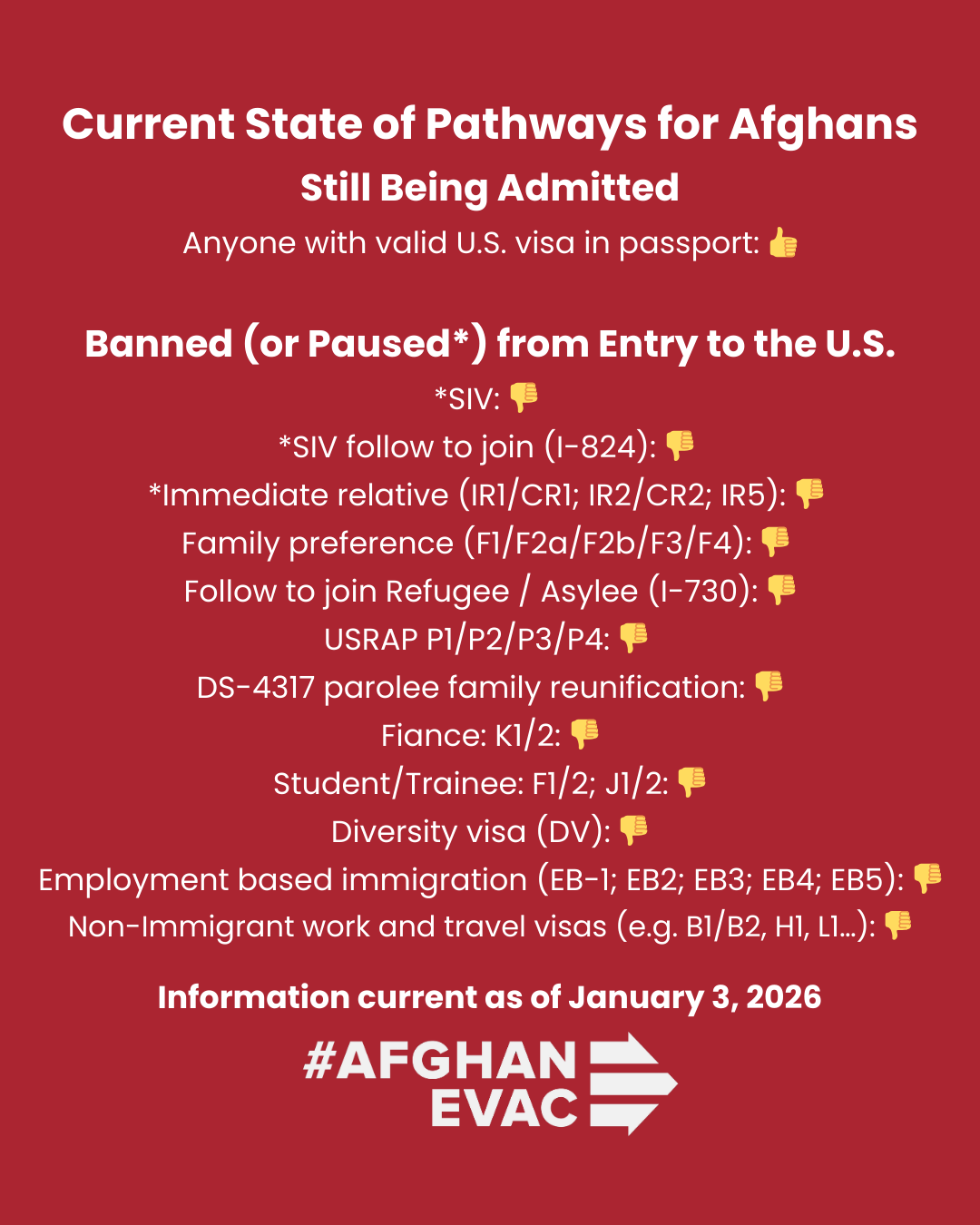
We continue to operate in a largely frozen environment, there is no other way to say it.
Thousands of Afghan allies remain stranded in third countries, particularly Pakistan and in U.S. government custody in Qatar, with deteriorating legal status and increasing risk. There is no quiet restart underway. There is no secret exception process. Anyone telling families otherwise is either mistaken or doing harm.
CARE is dead and Enduring Welcome remains effectively cancelled. Refugee cases are not moving, and we don’t expect them to anytime soon. Family reunification and Follow-to-Join Asylee approvals are not happening. This is not a paperwork issue, a staffing issue, or a lack-of-authority issue. It is a deliberate policy choke point, and families are paying the price.
That reality is grim, but clarity matters. False hope is worse than bad news.
What changed last week
Substance did not move, but pressure did.
Last week’s New York Times story on SIVs created real anxiety, especially among Afghan families. We want to be clear. The article accurately reflects dysfunction and delay, but it does not signal a new policy opening or closure. It is a snapshot of a broken system, not a roadmap forward. We are continuing to engage reporters to make sure Afghan voices and real-world consequences are centered, not buried in bureaucracy.
We are also tracking the government’s appeal of a temporary restraining order related to the detention of Minnesota refugees. This matters far beyond Minnesota. It speaks to a broader posture that should concern anyone who cares about due process and the rule of law.
Details below.
Government Appeals Court Order Blocking Refugee Detentions in Minnesota
Late last week, the federal government asked a judge to lift a temporary restraining order that currently bars the Trump administration from arresting and detaining lawfully admitted refugees in Minnesota under Operation PARRIS. The restraining order, issued by U.S. District Judge John Tunheim, halted the practice after a class action lawsuit (brought by our friends from IRAP) argued that federal agents were targeting refugees who have not yet received permanent resident status, detaining and transporting some to out-of-state facilities without warrants or cause.
The judge’s order also required the immediate release and return of those already detained. The government’s appeal contends federal law requires refugees who have not yet obtained green cards to be returned to federal custody for verification, but Judge Tunheim has signaled skepticism, noting that less coercive measures such as notice to appear could be used instead.
We’ve seen this order in action as several Afghan P1/P2 recipients have gone through the interviews successfully.
Government targeting volunteers helping Afghans
A recent Washington Post investigation describes how the Department of Homeland Security has used administrative subpoenas, which do not require prior approval from a judge, to obtain Americans’ personal data after they engaged in lawful speech related to immigration matters. In the reported case, a U.S. citizen who emailed a DHS prosecutor urging leniency for an Afghan asylum seeker later learned that DHS had subpoenaed his Google account and sent agents to his home, despite no allegation of criminal wrongdoing. Civil liberties groups warn this practice can chill lawful advocacy and volunteer activity.
What this could mean for volunteers in our network
Many people connected to AfghanEvac support Afghan allies through independent volunteer roles with a range of organizations. AfghanEvac often shares information, updates, and resources across this broader community. This reporting is a reminder to stay informed and careful as immigration enforcement tools are used more aggressively, even where individuals are acting lawfully and in good faith.
What to do if you are notified about a subpoena, warrant, or law enforcement contact
Do not panic, and do not assume you have done anything wrong.
Do not consent to searches, interviews, or requests for information without speaking to a lawyer.
Ask for documentation, including a copy of any subpoena or warrant. Note that administrative subpoenas are not issued by judges.
Do not delete emails, messages, or records once you are notified.
What we’re asking of you
If you receive notice of an administrative subpoena, data request, or law enforcement contact that appears related to your immigration or Afghan ally advocacy, please let us know by emailing contact@afghanevac.org with the subject line “Subpoena received.”
Sharing this information does not imply wrongdoing or liability. It helps us understand what is happening across the community and ensure accurate, timely information sharing. AfghanEvac is not providing legal advice or representation in these situations; this request is solely about situational awareness and community safety.
We will continue to track this issue and share relevant updates as they emerge.
Update on Recent New York Times Coverage
A recent New York Times article about Afghan partner visas has generated understandable concern. The underlying reporting is generally solid, but the headline is misleading, and the piece lacks the nuance necessary for most readers to accurately understand the current state of play. For that reason, we have created a separate explainer to provide clearer context on what has actually changed, what has not, and where viable pathways and pressure points remain.
The article does accurately capture a troubling reality: some lawmakers are currently unwilling to stand publicly and forcefully with our Afghan allies, despite years of bipartisan commitments. That is unacceptable. At the same time, history tells us that positions harden and soften over time. We are confident many of these members will ultimately come back home on this issue. Our work must balance accountability with persistence, holding leaders to their promises while keeping the door open for future collaboration, regardless of whether they have an R or a D after their name.
The story also centers on Zia Ghafoori, who will testify at this week’s hearing. Zia’s story is extraordinary. He served shoulder to shoulder with U.S. forces and was honored twice by President Trump at Medal of Honor ceremonies at the White House. His testimony is a powerful reminder of who these Afghan allies are, and what the United States owes them.
We encourage everyone to read the explainer, stay grounded in the facts, and keep pushing with clarity, discipline, and resolve.
New DOJ Rule Weakens Immigration Appeals Process
The Department of Justice has issued an interim final rule that significantly weakens the Board of Immigration Appeals, the body responsible for reviewing immigration judge decisions and correcting errors before people are removed from the United States. As outlined in our explainer, the rule sharply shortens appeal deadlines, limits briefing, expands summary dismissals, and allows many cases to become final removal orders without meaningful review. In practice, this strips away a critical due process safeguard, particularly for detained individuals, people without lawyers, and those navigating the system under extreme time and resource constraints.
While the rule applies broadly across the immigration system, it poses real risks for Afghan allies and others with complex cases who rely on appellate review to correct mistakes, incomplete records, or misapplications of the law. By collapsing timelines and reducing oversight, the rule shifts error correction out of the administrative process altogether and increases the likelihood of wrongful removals. We have published a plain-language explainer to help clarify what this rule does, who it affects, and why it matters.
Roundtable with Governor Newsom
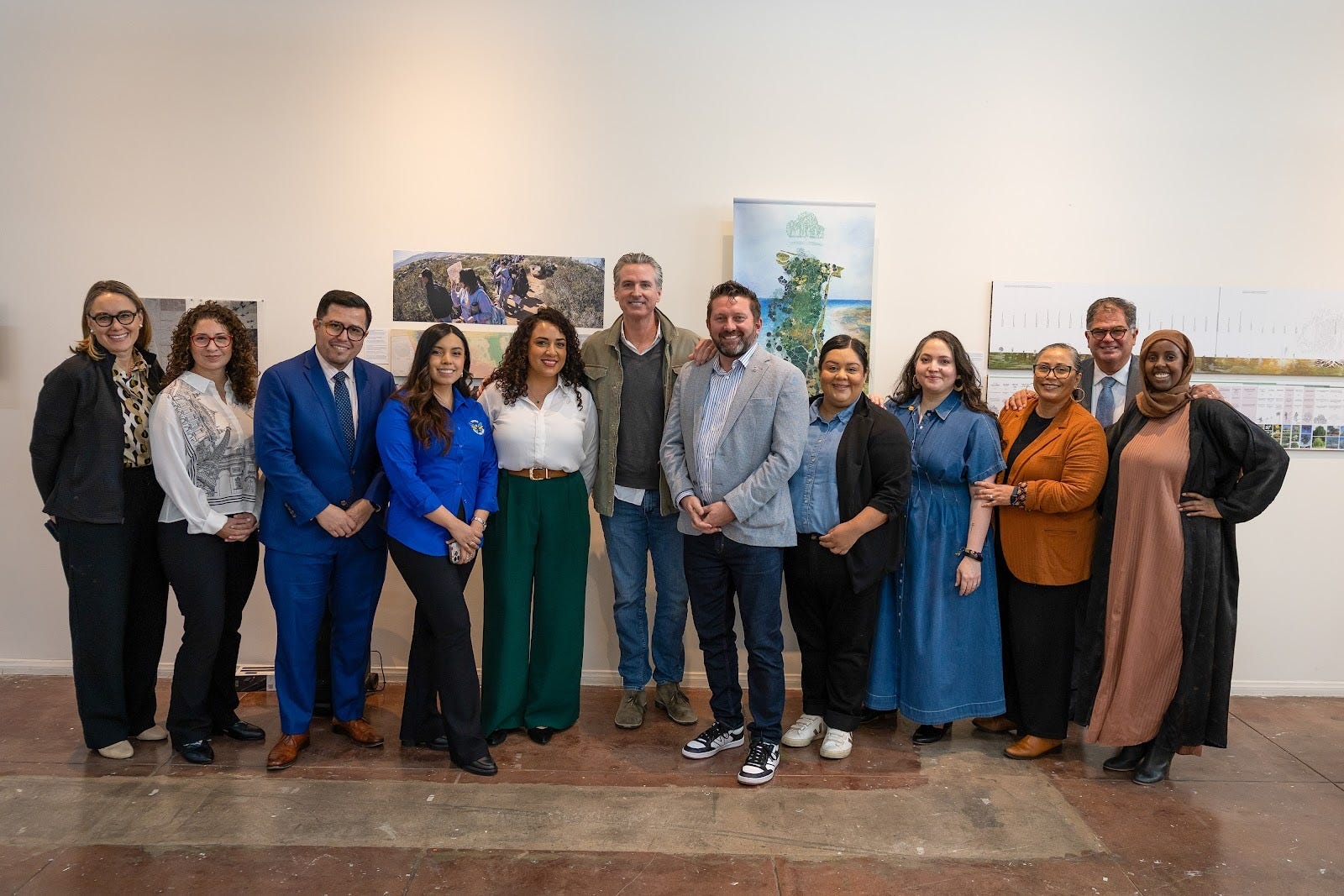
We showed up. Last week, we participated in a roundtable with Governor Gavin Newsom and California leaders focused on immigration, enforcement, and humanitarian impacts. Afghan allies were part of that conversation.
After hearing directly from us about the current reality facing these families, the governor immediately began speaking publicly about their plight and the moral obligation to stand by those who stood with us.
We are going to keep showing up at the state and local level, because leadership still matters, and engagement still moves the needle.
Late breaking Pakistan developments
We are closely tracking new reporting out of Pakistan indicating plans to deport thousands of Afghan nationals, including nearly 20,000 individuals who are in, or directly connected to, U.S. immigration pathways. These reports raise serious concerns for Afghans who followed U.S. government guidance and are now facing increased risk through no fault of their own.
In response, later today AfghanEvac will be sending a formal letter to the President of Pakistan and the Pakistani Ambassador to the United States, urging restraint and protection for Afghans awaiting U.S. processing. We will also be releasing a new Pakistan explainer that lays out how we got here, who is most at risk, and what this moment means for Afghan allies and for U.S. credibility.
We will share both online and in next week’s update. We strongly encourage everyone to review and amplify once released.
Press
Feds clash with advocates over Minnesota refugee sweep – Courthouse News
Gov. Newsom meets with immigration advocates in San Diego – Fox 5 News
Local leaders meet with Gov. Newsom prior to San Diego-based press conference – ABC News
How Stephen Miller Stokes Trump’s Boundary-Pushing Impulses – WSJ
Homeland Security is targeting Americans with this secretive legal weapon – Washington Post
Government appeals temporary restraining order prohibiting the detention of Minnesota refugees – Minnesota Star Tribune
MN refugees and immigrants are hiding at home in fear of ICE – Minnesota Star Tribune
Make it “Something. Not nothing.” — James Seddon Medium
A reminder that we have recently released several new resources to help cut through confusion:
A plain-language SIV explainer.
A clear breakdown of the BIA final rule and what it actually does and does not change.
Analysis of the Heritage report and why its framing is dangerous, misleading, and increasingly influential.
A (mostly) comprehensive list of the letters we’ve sent to the hill
These tools exist so advocates, lawyers, Hill staff, and community leaders are operating from facts, not fear.
As always, our work continues in a difficult environment, but the path forward is clear. We will keep telling the truth, applying pressure where it is required, and building coalitions broad enough to win lasting solutions.
That means holding leaders accountable when they fall short, welcoming them back when they are ready to lead, and staying focused on the Afghan allies and families who are counting on us to see this through.
Progress rarely comes in straight lines, but it does come from sustained effort and showing up again and again.
Within the NATO framework, countries involved in the war in Afghanistan, such as Germany, Canada, Australia, and the United Kingdom, made promises to assist and evacuate their Afghan collaborators. However, during the withdrawal led by the United States, many Afghans whose lives were at risk were left behind. This has led to a weakening of international trust. If the United States fails to fully honor its commitments to allies and collaborators in the future, it could further damage its credibility on the global stage.Im one of the SIV holder that waiting from 2020 years all my midecal biometric done unfartunely I'm still waiting...we don't know what will be of our future life??????
Good luck Mr president