


This week we were going to have a big Pakistan update for you, but that has been pushed to next week because of some breaking news about a potentially forthcoming USCIS policy that could have a devastating impact on our Afghan friends who have already made it to the United States. Please make sure to read this email in full (it will take you less than 8 minutes) and be ready to take immediate action.
We also have an important update on the “12-Month Rule” for Immigrant Visas, information about the Afghan Support Center in Fresno this week, and a litany of news stories at the end, including a 37 minute special that everyone should watch and yet another Afghan ally snatched up by ICE.
Before we get into all of that, here are 3 things you can do right now to help our allies.
Call AND write your members of Congress. Tell them this cannot happen. Look them up and then use the button below to see our draft.
Read this NYT story or my X thread from yesterday and then share this Monday Morning Update with your networks tell the world what’s happening.
Donate to help us keep fighting for our allies.
Devastating USCIS Policy
On Friday, the New York Times broke a story about a potentially forthcoming USCIS policy that would mean the Travel Ban applies to those already here seeking Green Cards.
The Trump administration is preparing to finalize a Department of Homeland Security policy that would make it dramatically harder for immigrants from countries covered by the President’s June travel ban, including Afghanistan, to obtain green cards, parole, or other immigration benefits.
The draft guidance, obtained by The New York Times, shows that U.S. Citizenship and Immigration Services (USCIS) plans to treat “country-specific factors” listed in the travel ban as “significant negative factors” in deciding whether to approve an application.
That means Afghans could be denied immigration benefits simply because of where they were born, even if they’ve already passed all security checks, served alongside U.S. troops, or have lived here lawfully for years.
Importantly: this policy has not yet gone into effect. It is still being finalized inside DHS. That means there is a critical window of time to speak up and pressure Congress and the Administration to stop it before it becomes law.
What It Would Do
If enacted, the policy would:
Treat an Afghan passport or birth certificate as a “negative factor” in green card, asylum, or parole decisions.
Apply to people already living inside the U.S., not just those seeking to enter.
Create a shadow extension of the travel ban, targeting law-abiding Afghans who have already been screened and admitted.
Threaten thousands of Afghans with denials, detention, or removal, even if they have legal status or pending humanitarian claims.
Undermine the integrity of the immigration system by discriminating based on nationality.
Former USCIS officials have called this “a radical change” and “an escalation of the attack on legal immigration.” One said plainly: “They’re trying to reach inside the United States and overturn the settled expectations of people who have already been here.”
What We Know and What We Don’t
What We Know
The policy is still in draft form and has not taken effect.
It would apply to any discretionary USCIS decision, including green card applications, humanitarian parole renewals, and asylum adjustments.
Refugees from Afghanistan and other banned countries who have already been admitted to the U.S. are not automatically exempt. When refugees apply for green cards (as they must after one year), those applications require a discretionary review. Under this policy, their country of origin could be treated as a “negative factor.”
That means tens of thousands of Afghans admitted through the U.S. Refugee Admissions Program or Enduring Welcome could face longer delays, higher denial rates, and potential loss of status when they try to become lawful permanent residents.
USCIS has not issued formal public guidance or opened a comment period which suggests the administration may try to move quickly and quietly.
What We Don’t Know (Yet)
Whether the rule will apply retroactively to pending cases or only to new filings.
Whether SIV recipients and their derivative family members will be explicitly protected in the final text.
How this would interact with refugee resettlement law, which requires adjustment to permanent residence after one year.
Whether there will be any formal waiver process for those affected.
How “country-specific factors” will be defined and whether Afghans will have a fair chance to rebut them.
Whether derivative beneficiaries (spouses/children) will face identical “negative factor” weighting when adjusting; USCIS has not disclosed operational guidance.
Who Is Immediately at Risk
Refugees admitted to the U.S. now applying for green cards under INA §1159.
Parolees and asylum grantees seeking adjustment to permanent status.
Bottom line: already-screened Afghans, living lawfully in the U.S., could face green-card denials or indefinite limbo simply because of their nationality.
Until USCIS publishes the final guidance, we are working from internal drafts, and our advocacy right now can shape the outcome.
Why It Matters
This is more than a bureaucratic shift, it’s a moral test. If enacted, it would break the promises the United States made to our Afghan allies, punish families who did everything right, and violate our country’s commitment to fairness, nondiscrimination, and the rule of law. While the June 2025 travel ban governs who may enter the United States, this new USCIS draft would reach inside the country to punish those already here, a legally and morally distinct escalation.
It also sets a precedent that could reach far beyond Afghan evacuees, allowing the government to deny status to anyone from a country it labels as insufficiently “trustworthy.”
The policy’s legality is questionable. Experts say it could be challenged as discriminatory and unconstitutional especially because it applies to people already in the U.S., not foreign nationals seeking entry. But we cannot rely on the courts alone.
What You Can Do Right Now
Because this is still in draft form, our collective voice can stop it. Here’s how:
Contact your Senators and Representatives today. Demand that they speak out publicly, pressure DHS to withdraw this draft, and push for oversight hearings.
Ask Congress to:
Reaffirm statutory exemptions for Afghan wartime allies, SIV recipients, and humanitarian parolees.
Require USCIS to make decisions based on individual evidence, not nationality-based assumptions.
Publicly condemn nationality discrimination in immigration adjudications.
Share your story (safely) at contact@afghanevac.org so we can brief reporters and congressional staff. Send your social media posts or videos you want us to post from ours. If you want to talk directly to reporters, fill out our press interest form.
Spread the word. The more people who know, the more pressure there is to stop this before it becomes policy.
This is the moment to raise your voice. The policy isn’t final, but silence would make it inevitable. Every call, every letter, every statement matters. AfghanEvac was built to stand in these moments. Let’s do it again.
If you may be affected: Consult qualified immigration counsel before traveling internationally or filing adjustment paperwork. Collect positive equities (employment, service, community support, and tax records) to strengthen any future review.
Important Update: “12-Month Rule” for Immigrant Visas
The U.S. Embassy in Doha has started sending cancellation letters to applicants whose visa cases have been inactive for over one year.
Under U.S. law (INA §203(g)), if you don’t respond or take action within 12 months after being told to apply for your immigrant visa, your application and petition are automatically canceled. More details on this process are available in the Foreign Affairs Manual.
Cancellation letters typically include the following language:
Dear Visa Applicant:
We refer to your application for an immigrant visa. Section 203(g) of the Immigration and Nationality Act requires that your registration be canceled and any petition approved on your behalf canceled, if you do not apply for your immigrant visa within one year of being advised of visa availability, or fail to present evidence purporting to overcome the basis of your refusal under INA 221(g) within one year following the refusal.
You were advised of this requirement on _______________________, but we have not received a response from you since then. As a result, you are hereby notified that your application for a visa has been canceled and any petition approved on your behalf has also been canceled.
Your application may be reinstated and any petition revalidated if, within one year, you can establish that your failure to pursue your immigrant visa application was due to circumstances beyond your control.
This rule is even being applied to Afghan cases sent to Doha through the relocation program, which has caused serious concern.
What you should do:
Contact the embassy (by use of the Visa Navigator to craft the email) at least once every 12 months to confirm you still want to apply.
Save proof of your message and/or response.
If you receive a cancellation letter, speak with an experienced immigration attorney right away - reinstatement may be possible.
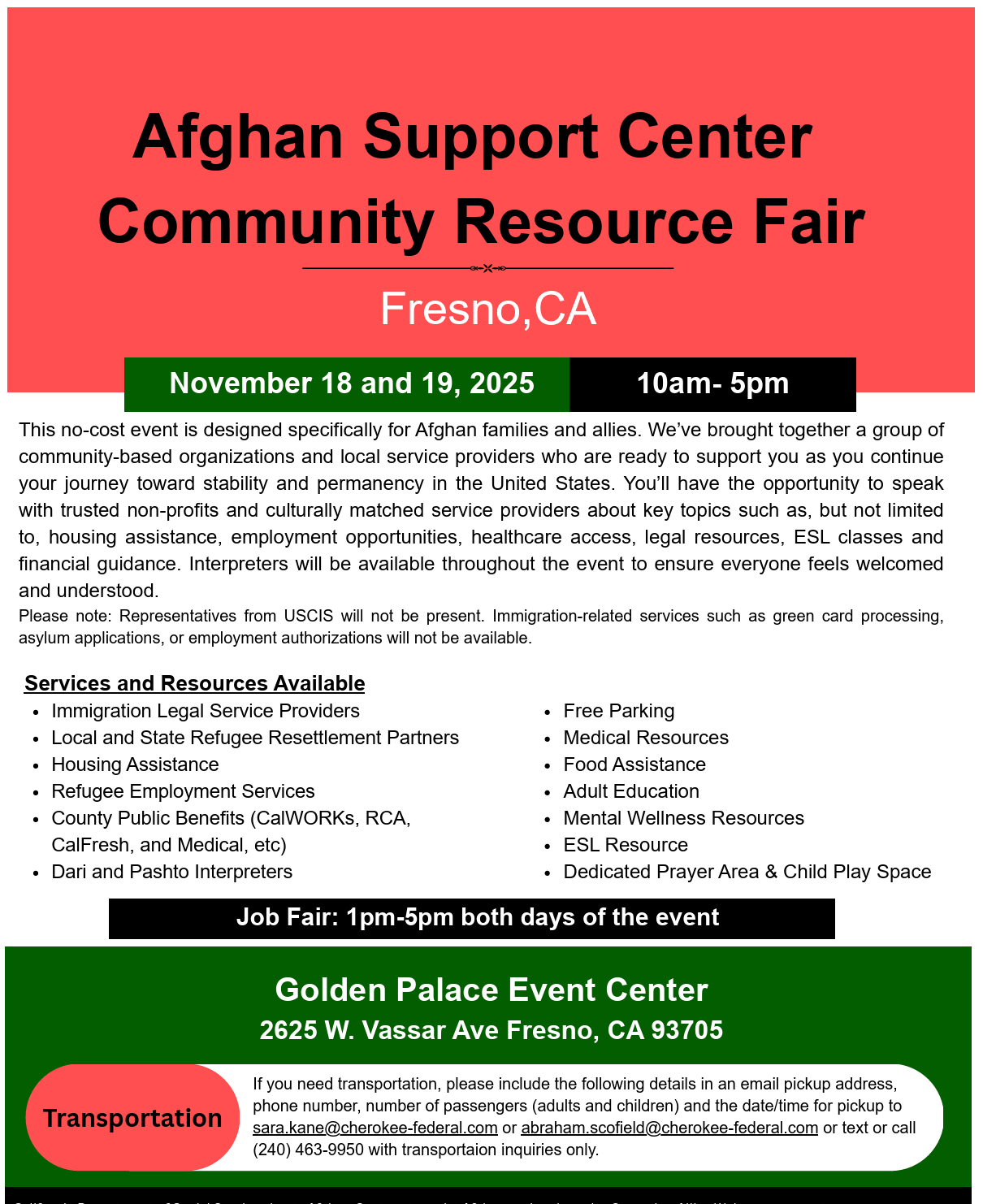
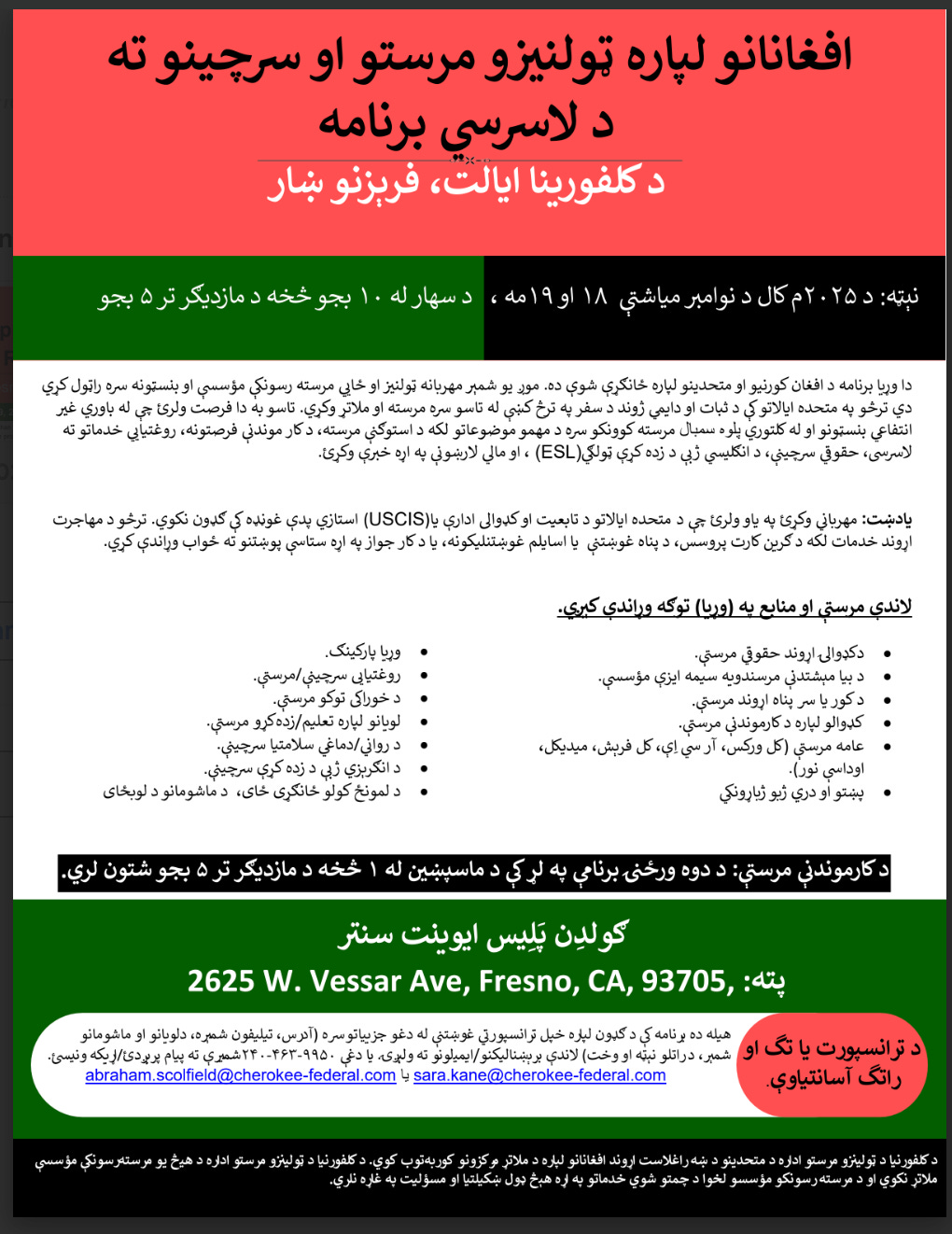
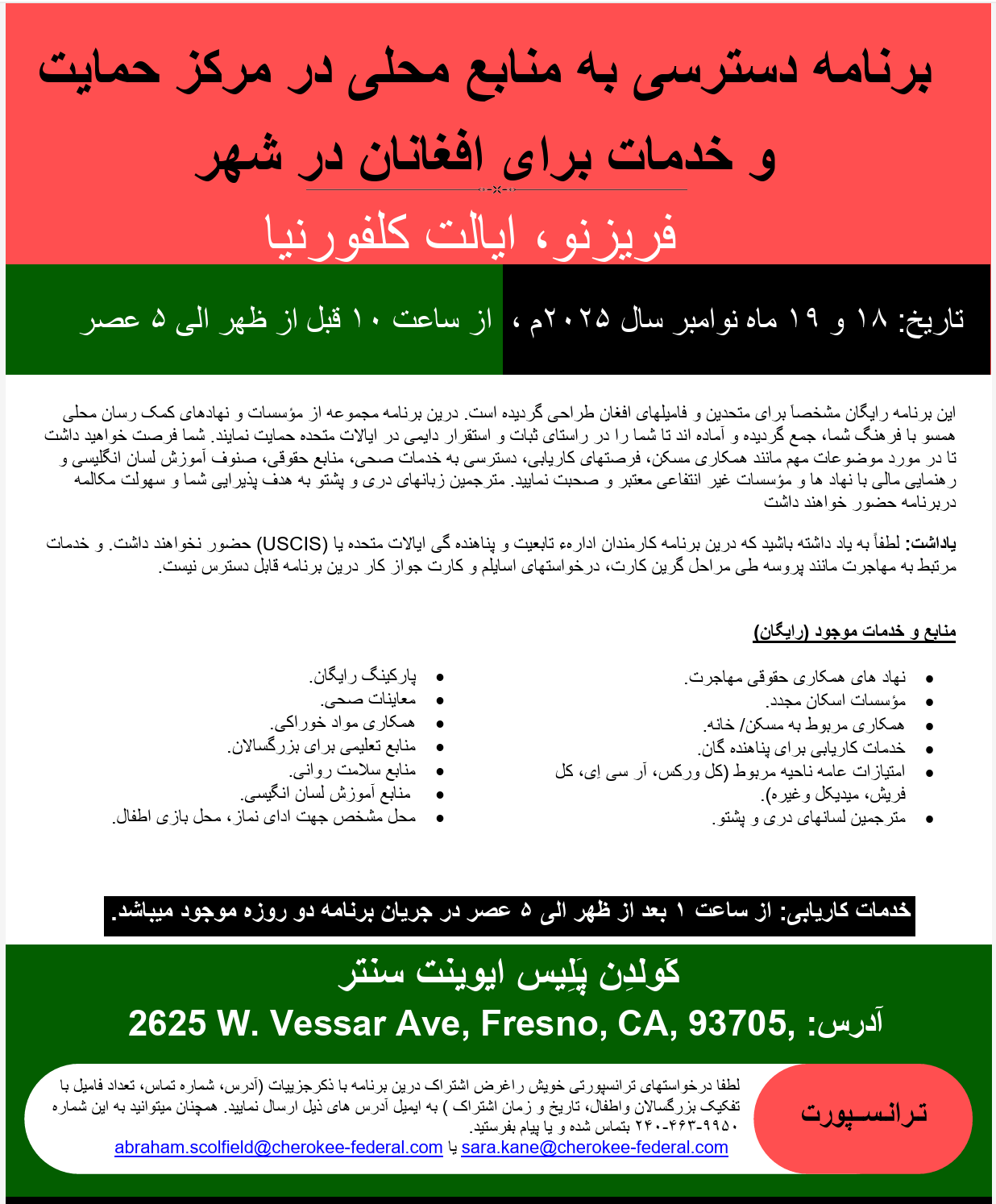
Afghan Support Center in Fresno
This week, on Tuesday and Wednesday in Fresno California, there will be another Afghan Support Center, funded by the State of California. There will be legal support but no federal government services. AfghanEvac will have a table there, staffed by our team member Rahmat.
Afghans in Central California are encouraged to attend.
When: November 18 and 19, 2025 10am to 5pm each day
Where: Golden Palace Event Center 2625 W. Vassar Ave Fresno, CA 93705
In the press
Afghan allies ask for long-awaited protection — World News Group
Notice to Appear: Inside San Diego’s Immigration Court — NBC San Diego
Trump curtails refugees to a trickle. How does this compare to other restrictions in U.S. history? — Deseret News
Colorado congressmen call on ICE to release Afghan immigrant who helped fight the Taliban — Colorado Sun
Opinion: U.S. must make Afghan women’s rights non-negotiable — San Diego Union Tribune
U.S. plans tougher green card rules for Afghans and other travel-ban countries: NYT — Khaama Press
As SNAP benefits resume, some Afghan immigrants who supported U.S. war efforts are denied — Boston Globe
Afghanistan’s fragile communities buckle under pressure as millions return home, UNDP says — ABC News
Thank you for staying in this fight, don’t forget to share this update with your networks.
Unfortunately, there has still been no practical progress on SIV or CARE evacuation flights from Afghanistan. International promises remain only on paper and in speeches, but nothing is happening in action. We are still trapped in danger, waiting every single day with an unknown future. There is a lot of talk in the name of humanity and humanitarian assistance, but we see no real signs of action. Our concerns have only grown. This situation threatens our lives, the future of our children, and the hopes of our families. The international community needs to understand that we are tired of empty promises — we need action, not just words.
Subject: Let Afghan DV-2026 Winners Live Their American Dream
Dear Sir/Madam,
I am writing to you with a heavy heart on behalf of the Afghan Diversity Visa (DV-2026) winners and their families — people whose dreams, hopes, and futures now hang in painful uncertainty because of the recent executive travel restrictions.
For thousands of Afghans, being selected in the U.S. Diversity Visa Lottery was not just luck — it was a lifeline. It was the promise of safety after years of war, the hope of rebuilding lives in peace, and the belief that justice and opportunity still exist in this world. These are honest, hardworking, and educated individuals who followed every rule, trusted in America’s fairness, and dreamed of contributing to the nation they admire.
But today, that dream feels like it’s slipping away. Many of these families have sold their homes, left their jobs, and invested everything they had to prepare for a new beginning in the United States. Now, they find themselves in despair — their hopes fading, their future uncertain, their faith in justice shaken.
They are not asking for special treatment. They are only asking for the chance they rightfully earned — the chance to live in peace, work hard, and raise their children in safety and dignity. To deny them now would not just break their dreams; it would break the very spirit of fairness and compassion that has always defined America.
Please, let their voices be heard. Let their hopes be restored. Let the Afghan DV-2026 winners begin the new life they were promised — one filled with purpose, gratitude, and contribution to the country they have long admired from afar.
With heartfelt respect and hope,
On behalf of the Afghan DV-2026 Diversity Visa Winners and Their Families