

This was a week of official accounts that did not survive contact with the facts.
UNHCR reported that global displacement fell for the first time in a decade, and the honest reading is that Afghans were forced home in record numbers while the lawful path that could have caught them collapsed, with the United States leading the retreat.
Congress advanced a defense bill that pairs a genuine win for Afghan allies with a Camp As Sayliyah protection that, as written, protects no one.
The administration, ordered by a court to restart the USCIS cases it had frozen, chose to fight the order instead.
And through all of it, our team carried the fight to San Diego, where the country's immigration attorneys gathered for the week.
Here is what happened, what it means, and what you can do about it.
A note before we begin.
This week the Dallas County medical examiner ruled the death of Nazeer Paktiawal, an Afghan husband and father who died in ICE custody in March, an accident. We do not have the full autopsy report yet. We expect it in the coming days, and we will read every page before we say more.
What we will say now is this. Nazeer was branded a criminal by the government that brought him here, on the basis of two arrests that produced no charges, and we will not let that stand as the last word on a man who risked his life beside American soldiers. Something about how this finding was reached does not sit right with us, and we are going to get to the bottom of it. We are grateful to everyone who has followed this case, and we will continue to keep you informed.
ACTION THIS WEEK
Give if you can. Our work to support allies at Camp As Sayliyah, in Pakistan, and in the United States runs on people who refuse to look away.
Stand with the families at Camp As Sayliyah. Read our 2027 NDAA analysis then send the message to your House member and both senators at afghanevac.org/cas-action. The site is slated to close September 30 and there is still no plan.
Fight the EAD rule. The administration’s proposed rule threatens work authorization for Afghan parolees. The comment window closes August 4, 2026. Details and a comment guide at afghanevac.org/ead-rule-change.
Share the record. UNHCR’s new data shows Afghans were the largest forced-return movement on earth last year. Share this update, tag your members of Congress, and use #StillWithUs and #AfghanEvac. Correcting the story is how we change it.
A personal note
I wrote two opinion editorials this Father’s Day, because being a father is the lens through which I see this fight.
One ran in the San Diego Union-Tribune, On the father I was and the father I became. The other is The audience that matters most this Father’s Day.
I spent yesterday with my kids, and I know how lucky that makes me. So many dads did not get that. Some are separated from their children by a border, a detention cell, or an ocean. Some are waiting at Camp As Sayliyah for a decision that will determine whether they ever hold their kids again. And Nazeer Paktiawal, a father of six, will never see his children again, because he died in ICE custody one day after he was taken. They were all in my heart yesterday, and they are the reason this work does not stop.
Neither op-ed is about policy. Both are about what we owe the people who depend on us. I am grateful to everyone who read and wrote back.
The world’s displacement numbers fell, because Afghans were forced home
UNHCR released its annual Global Trends report this week, and for the first time in a decade the number of forcibly displaced people worldwide fell, to 117.8 million. Read past the headline and the reason is not peace. It is return, and most of it was not a choice.
Afghans were the largest refugee return movement on earth in 2025. Roughly 2.9 million Afghans went back, including about 1.9 million refugees, and UNHCR assesses most of those returns as involuntary, forced by Iran and Pakistan tightening the screws rather than by anything getting safer in Afghanistan. From Iran alone, returns in July sometimes exceeded 40,000 people in a single day. The result is that the global Afghan refugee population dropped about 36 percent in one year, to roughly 3.7 million. That number falling is not good news. It is a measure of how many places will no longer hold them.
Now set that against the lawful alternative. Worldwide resettlement more than halved in 2025 to 81,800, the lowest level since 2011, and it reached only 3 percent of the people who needed it. The United States led the collapse with an 89 percent drop. Afghans were still the single largest nationality resettled, at 17,900, and even that was cut in half. The legal door closed hardest on the very people being pushed out the back.
State it plainly. The global picture improved on paper because Afghans lost their refuge, while the country that made them a promise led the retreat from the one orderly path home. This is the same coercion we fight at Camp As Sayliyah, in Pakistan, and in every frozen SIV case, now visible at the scale of millions.
Why it matters A return counted as a solution is not the same as a person arriving somewhere safe. The people in our pipeline are inside these numbers, and the data makes our argument for us. When the rest of the world is closing doors on Afghans, the case for America keeping the one promise it made gets stronger, not weaker.
AfghanEvac showed up at AILA
The AfghanEvac team joined the American Immigration Lawyers Association at its annual AC26 conference in San Diego, June 17 to 20. With almost 3,000 immigration lawyers and legal professionals in attendance, we met with dozens of attorneys, members of AILA’s national committees, the South Asian Bar Association, and others whose work aligns with ours. Rabea, Jonathan, Hasina, Maryam, and many more spent the week in the rooms where these cases are actually carried.
We talked about closer collaboration with the AILA National Asylum and Refugee Committee, which includes many former leaders from USCIS. The areas we want to build out include capacity building, so more immigration lawyers can handle the legal questions specific to the Afghan community, and updated, integrated explainers and communications tailored to Afghans. We also connected with several new team members joining us from government, people who know the inside of USCIS, DHS, and the immigration courts. We will introduce them soon.
Battle Buddies was a hit. We brought the program to AILA and SABA members from across the country, attorneys came looking to sign up and to learn how it works, and we strengthened our ties to the immigration legal community nationwide. If you are a legal professional who wants to get more involved in AfghanEvac’s work, or you are looking for resources to better serve your Afghan clients, sign up for our lawyers list.
Why it matters Policy fights are won by people, and the people in that room are the ones who turn a court ruling or a new explainer into a real outcome for an individual ally. Showing up, in person, is how the coalition holds.
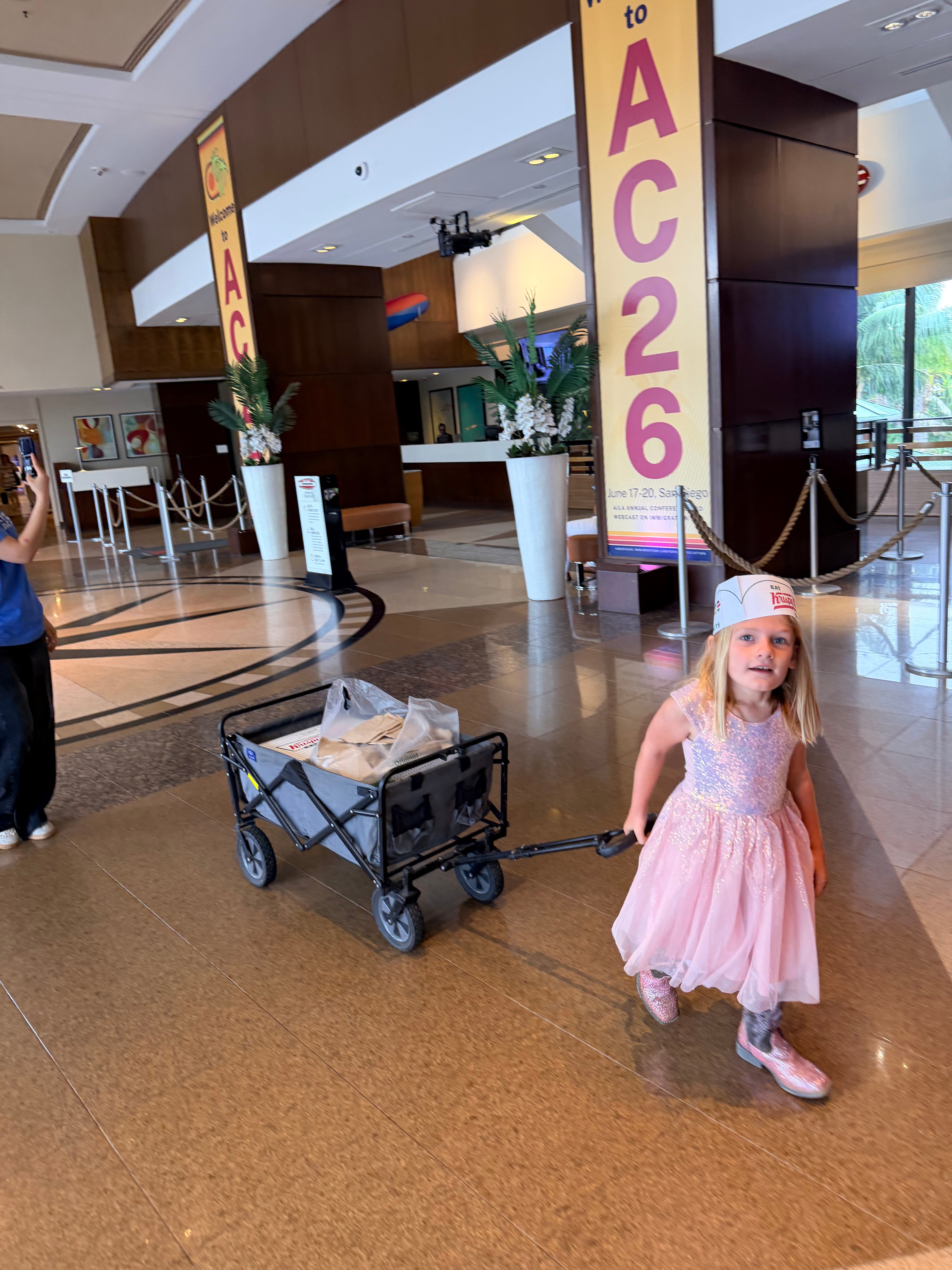
And the lighter side of a hard week. My daughter Daphne appointed herself the convention’s donut fairy, handing out donuts to grateful attendees until staff shut her down for the unauthorized distribution of food. She is, we are told, weighing an appeal.
Mayor Gloria stood with us in San Diego
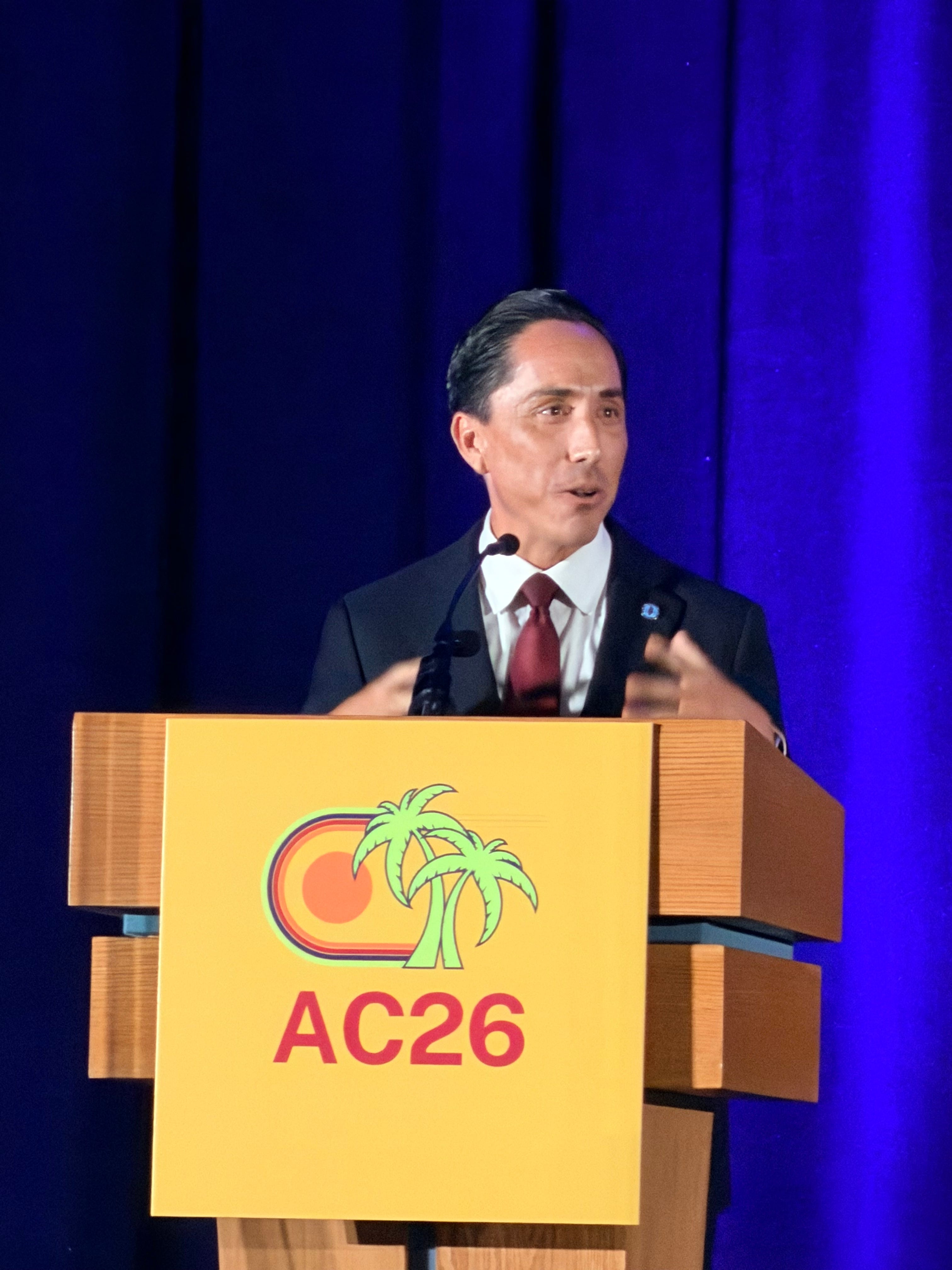
At AILA this week, San Diego Mayor Todd Gloria gave AfghanEvac and our Battle Buddies program a shoutout in front of a room full of the attorneys who carry this fight in court. We are grateful, and we are proud that this work is rooted in our city.
San Diego has shown up before. In 2022, 2023, and 2024, San Diego was the only city in the country to include the Afghan Adjustment Act in its federal legislative platform, proposed by the Mayor and passed by the City Council. That is what local leadership looks like when it takes a promise seriously.
Why it matters
This fight is won in Washington, but it is carried in communities. When the leadership of a major American city stands with Afghan allies and the veterans who serve them, it tells every family still waiting that they are not invisible, and it tells Washington that the country has not moved on.
At the table on rebuilding USCIS
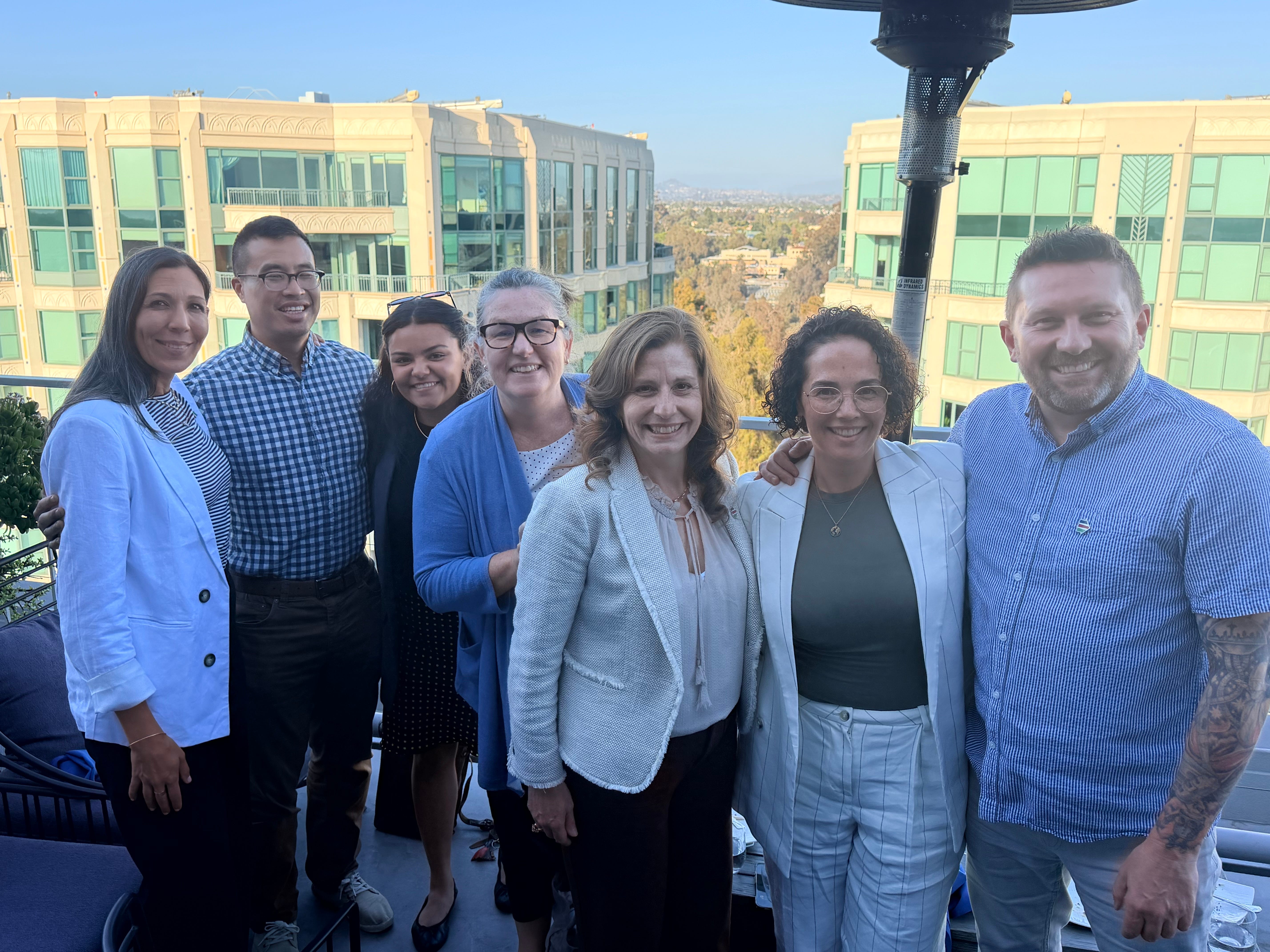
This week we co-hosted a listening session with the Niskanen Center’s State Capacity USCIS Project, the cross-partisan effort led by former USCIS Director Ur M. Jaddou and former USCIS Deputy Chief of Staff Emilie Hyams to make the agency administer legal immigration fairly, efficiently, and on time.
We brought the Afghan community’s experience into the room at Kunduz Kabob in San Diego, the frozen cases, the backlogs, the work authorization gaps, and the human cost of a system where delay has become the rule rather than the exception.
We are grateful to Ur, Emilie, and their entire team for the work they are doing. The damage being done to USCIS right now is real, and it will take serious, clear-eyed people to repair it. When this nightmare has passed, the system will have to be rebuilt, and we are committed to helping do exactly that, alongside partners like this one.
Why it matters The same agency dysfunction we fight case by case is what this project is working to fix at the structural level. Afghan allies have lived nearly every failure mode USCIS has, so their experience belongs at the center of any serious blueprint to rebuild it. Reform that lasts has to be built with the people the system is failing, not around them.
On the defense bill, a real win and a protection that is not one
The Senate version of the FY2027 defense bill carries one genuine victory and one promise that, as written, is hollow.
The win is a records preservation program that would create and protect the files documenting who these Afghans are and what they did for the United States. That is real, and it matters long-term.
The hollow part is the Camp As Sayliyah language. As drafted, it restricts only Department of Defense funds, and the Department of Defense has not funded or operated Camp As Sayliyah since 2023. The State Department runs it and funds it. Language that ties the hands of the wrong agency protects no one. but there is a way forward, and that’s why we need you to act now.
Read our full analysis and our statement. Then demand standalone protection now at afghanevac.org/cas-action.
The government is appealing the order that told USCIS to do its job
On June 5, a federal court in Rhode Island vacated four USCIS policies nationwide, including the Benefits Hold and the Global Asylum Hold, which had frozen green card, work permit, and naturalization applications for nationals of 39 travel-ban countries, Afghans among them. Final judgment came on June 11. On June 12, the government filed a notice of appeal to the First Circuit and is now moving to stay the ruling.
There has been no decision on that stay yet, so for now the policies remain vacated and USCIS should be adjudicating the cases it sat on for months. But the message in the government’s first move is plain. Told by a court to do its job, the administration’s instinct was to ask a higher court for permission to keep the freeze in place.
Why it matters Behind those four policies are Afghan allies who filed properly, paid their fees, completed biometrics, and then lost jobs and status while their cases sat untouched. The win is real and it is ours to defend. We are watching the stay docket closely.
Work authorization is built into refugee and asylum status, and we are making that clear to employers
Refugee and asylum status carry the right to work as an incident of the status itself. A person granted asylum, and a person admitted as a refugee, is authorized to work in the United States. That does not change because an agency slow-walks a piece of paper. We are building a plain-language explainer for employers, so that hiring managers and small business owners are not left guessing, and so that qualified people are not turned away on the basis of confusion the government has every reason to encourage.
Why it matters This connects directly to the Rhode Island ruling and the EAD fight. When the administration freezes or complicates work authorization, it does not only punish applicants. It pushes them out of the workforce that needs them. Clarity is a form of defense.
Share our video here.
At the UN, a smaller room and a bigger fight
The UN convened its Consultations on Resettlement and Complementary Pathways in Geneva this month. The format was invite-only, refugees themselves had no real seat, and states declined to commit to resettlement as a durable solution. One of the concrete outcomes was a pledge to tell more stories.
Stories matter. They are not a substitute for places, funding, and political will.
Why it matters
When the institutions built to protect refugees start treating storytelling as the deliverable, the people who need actual resettlement are the ones left waiting.
In the news
Camp As Sayliyah
‘Cannot escape’: Afghan girl held at US military base in limbo amid Trump immigration policies -- ABC News
Afghan Refugees in Qatar Face Uncertain Future as US Relocations Slow -- TOLOnews
The death of Nazeer Paktiawal and ICE custody
Death rate in ICE immigrant detention centers more than doubles under Trump -- Reuters
March death of Afghan asylum seeker who was in ICE custody ruled accidental by Dallas County -- KERA News
New ICE document sheds light on March death of Afghan asylum seeker who was in federal custody -- Houston Public Media
Family of Afghan war ally who died in ICE custody left without answers more than 90 days later -- KTVQ
The defense bill
US Budget Bill Seeks to Block Transfer of Afghan Allies From Qatar to High-Risk Countries -- Khaama Press
Refugees, asylum, and the courts
Ranking Member Shaheen, Representative Lieu Introduce World Refugee Day Resolution -- Senate Foreign Relations Committee
Pacito v. Trump: court grants refugees’ motion to amend as the challenge to the refugee ban proceeds -- International Refugee Assistance Project
Trump targeting immigrants from countries hit most by climate shocks -- The Guardian
US in talks with Jamaica to send third-country migrants as rift widens in Caribbean -- Associated Press
The world will read this week’s numbers as people going home. We read them honestly.
Afghans were forced out, doors closed on every side, and the government that made a promise led the retreat from the one path it swore to keep open.
Nazeer Paktiawal is what that looks like up close, and the 1,100 at Camp As Sayliyah are what it looks like next.
None of this is fate. It is a chain of choices, made by people with names, and choices can be unmade.
So read the special edition, send the letter, and stay in this with us.
We are furious. We are focused. And we are not going anywhere.
What stands out to me is that this is not only a humanitarian or immigration issue. It is also a question of strategic credibility.
When governments ask local partners to take risks, share intelligence, support security operations, and stand alongside them, those relationships create expectations that do not simply disappear when a mission ends.
The way a country treats its former partners is therefore also a message to its future partners.
Promises made during war are tested most seriously after the war—when keeping them becomes politically difficult.
That is why accountability here matters beyond the Afghan cases themselves. It is part of the credibility of future partnerships.
— Wahidullah Noorzai